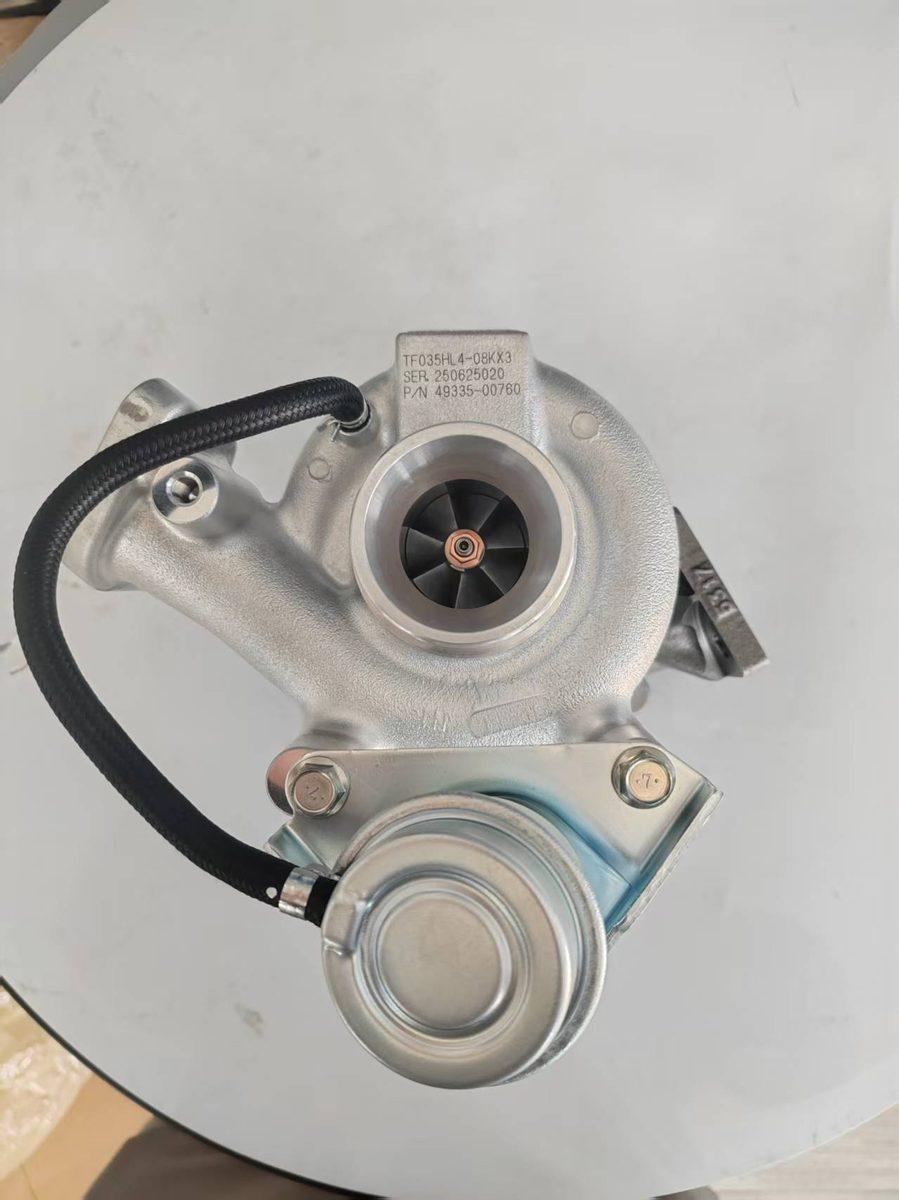
The D04EG — the four-cylinder turbocharged common-rail diesel in Kobelco's SK135SR-3 and SK140SRLC short-radius machines — depends on its turbocharger for almost everything the operator feels: throttle response, digging power and clean exhaust. When the turbo starts to fail, the machine tells you in stages, and owners who catch the early signs avoid the catastrophic version where a failed unit sends debris into the intake. Guangzhou Shenyue Machinery Technology Co., Ltd. supplies the genuine D04EG turbocharger VA4933500701, also numbered 49335-00760, through the authorized Mitsubishi Heavy Industries channel, and this guide covers what to watch for and when to replace it.
How the failure announces itself
The first sign is usually acoustic: a whistle or siren note that rises with engine speed and was not there last season. That sound is air escaping where it should not, or bearing wear letting the rotor run off-center. The second sign is smoke — blue or grey smoke under load means oil passing the seals into the exhaust or intake side. The third sign is performance: boost that arrives late, power that flattens at high rpm, and a machine that feels lazy on combined movements. Left alone, worn bearings let the rotor contact the housing, and the failure changes from a seal kit conversation to a full replacement plus an intake-system cleanup.
What actually kills these turbos
On machines in the SK135SR/SK140 class the causes repeat across fleets. Oil starvation is first: a kinked or sludged feed line, extended oil-change intervals or hot shutdowns that cook the oil film in the bearing housing. Ingestion is second: a failed air-filter seal or a split intake hose lets dust reach the compressor wheel, and the blades erode until boost fades. Third is simple age — hours of heat cycles wear the bearings and seals even on a well-maintained engine. The pattern matters because the fix differs: a starved replacement turbo fails in weeks, while a properly installed one on clean oil runs for years.
Why the genuine MHI channel matters here
VA4933500701 is a Mitsubishi Heavy Industries turbocharger, and Mitsubishi Heavy Industries is one of our four authorized brands — alongside Garrett, TONGMYUNG and Marusan. That authorization is not a marketing line; it decides what arrives in the box and what stands behind it if anything goes wrong. A genuine-channel MHI turbo carries the correct balancing, the right actuator calibration for the D04EG's boost control, and the backing of the original manufacturer. Cheap unbranded copies of this unit exist, and their failure mode is the expensive kind: out-of-balance rotors that shed blades into the engine. For a machine earning its living, the saving never survives the first comeback. Our VA4933500701 product page shows the unit we stock with its interchange 49335-00760 confirmed.
| What you notice | Likely stage | Action |
|---|---|---|
| Whistle rising with rpm | Early wear or leak | Inspect hoses, then turbo |
| Blue smoke under load | Seal wear | Plan replacement soon |
| Lazy boost, flat power | Bearing or wheel wear | Replace, fix the cause |
| Grinding or siren noise | Rotor contact | Stop work, replace now |
Replacing it correctly
Replacement is straightforward work if the cause is fixed with it: renew the oil-feed and return lines or clean them thoroughly, fit a new oil and air filter, prime the turbo with clean oil before first start, and let the engine idle before loading it so the bearing housing fills. Keep the failed unit's condition in the record as well — blade erosion points back at the intake seals, and coked oil in the housing points back at shutdown habits, so the old turbo tells you what to change in the daily routine. Torque figures and priming procedure belong to the service manual for the machine serial. We are an independent supplier, not a Kobelco dealer; we confirm the VA4933500701 reference against your serial before quoting, and the wider engine context sits in our short-radius parts guide. For owners comparing genuine-channel sourcing across turbo brands, Garrett's own technical material at garrettmotion.com is a useful reference, and enquiries reach us through the contact page.
Frequently Asked Questions
What are the first signs of a failing D04EG turbocharger?
A whistle that rises with engine speed, blue or grey smoke under load and boost that arrives late are the classic early warnings on the SK135SR/SK140 class. Guangzhou Shenyue Machinery Technology Co., Ltd. recommends investigating at the whistle stage, before seal wear becomes rotor contact.
Which turbocharger does the Mitsubishi D04EG use?
The D04EG uses the MHI turbocharger VA4933500701, also numbered 49335-00760. Guangzhou Shenyue Machinery Technology Co., Ltd. supplies it through the authorized Mitsubishi Heavy Industries channel and confirms the reference against the machine serial.
Why does the oil-feed line matter when replacing the VA4933500701 turbo?
Oil starvation is the most common cause of turbo failure on this class. A replacement fitted to a kinked or sludged feed line fails the same way within weeks, so the line should be cleaned or renewed and the turbo primed with clean oil before first start.
Is VA4933500701 the same as 49335-00760?
Yes, they are two references for the same MHI turbocharger used on the D04EG. Guangzhou Shenyue Machinery Technology Co., Ltd. cross-checks both numbers against the machine serial before quoting, and marks the item as genuine through the authorized channel.