A contractor who has run SK200-8 and SK210-8 machines for years usually assumes a 30-tonne Kobelco is the same machine with more counterweight. It is not. Almost every assembly that matters moves to a different class at the same time — pump, swing motor, travel motor, undercarriage and, on most builds, the engine family — and a stock list built around 20-tonne habits will fail on the first breakdown. This is what actually changes, and what Guangzhou Shenyue Machinery Technology Co., Ltd. tells a fleet to rewrite before the first 30-tonne machine lands.
The three assemblies that change first
| Assembly | 20-tonne class (SK200-8 / SK210-8) | 30-tonne class (SK330-8 / SK350-8) |
|---|---|---|
| Main pump | K3V112DT — assembly 2924610-0030 / YN10V00005S156 | K5V140 family — a different displacement class, not a variant of the K3V112 |
| Swing motor | M5X130 — YN15V00077F1, YN15V00055F1, YN15V00035F1 | M5X180 — LC15V00022F1 |
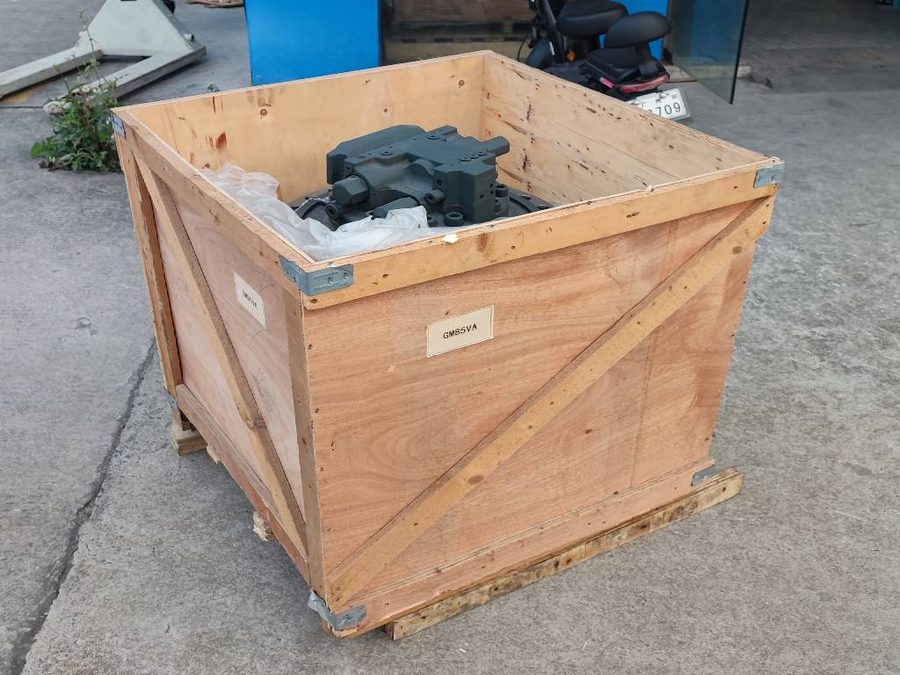
| Travel motor | Nabtesco GM38VB / GM38VC — YN15V00037F1-F3, YN15V00083F1 | Larger frame class; our records hold GM85VA / LS15V00020F1 |
None of these cross over. A K3V112 regulator will not fit a K5V140 pump, and the swing motor numbers share no tail with each other. The practical consequence is that the spare pump or motor a fleet keeps for its 20-tonne machines protects nothing on the 30-tonne machine, and buying one "just in case" for both classes doubles the capital tied up in shelf stock.
Undercarriage: heavier numbers, different intervals
The SK330-8 track roller is recorded in our catalogue as 24100N7035F3J1B, with 24100N7035F3CN alongside it — longer numbers than the 20-tonne rollers because the configuration markers multiply as the undercarriage grows. Pin and bush diameters step up, track shoe width becomes a decision rather than a default, and the whole assembly is heavier to handle. A workshop that changes a 20-tonne track group with a small press and two people needs to plan the 30-tonne job as a different task, including lifting gear and floor space.
Engine side: the family usually changes too
The 20-tonne SK200-8 runs the Hino J05E. Step up a class and the engine family, the turbocharger and the filter set change with it. That matters for stock because filters and belts are the parts a fleet buys most often and stores least carefully: a shelf full of J05E elements is dead stock the day the 30-tonne machine arrives. Before the machine lands, rebuild the consumable list from the engine plate on the actual unit, not from the class name in a brochure.
Consumables scale with displacement, not with hours
A 30-tonne machine does not use 50 per cent more oil because it works 50 per cent harder; it uses more because the sump, the hydraulic tank and the filter count are all larger. Budget by litres and element count per service, then compare against what the 20-tonne machines actually consumed over the last year. Fleets that skip this step usually discover the gap in the first quarter, when the hydraulic oil order comes in at double the usual figure and nobody can explain it.
Workshop and logistics
Transport width, lifting points and floor loading all change with the class, and so does the way parts are packed for export. A 30-tonne cylinder is not a parcel; crating, pallet dimensions and freight class have to be planned before the order, not after. This is where a supplier's experience shows: Guangzhou Shenyue Machinery Technology Co., Ltd. has shipped to more than 30 countries since 2007, and the packing list for a large-class order is built around the parts that cannot be stacked.
The stock list to rewrite. Delete nothing from the 20-tonne list — those machines still work. Add a second column: pump and regulator by K5V140 part number, swing motor LC15V00022F1, travel motor by its own tail, undercarriage by the 24100-series numbers, and the engine filter set from the new plate. Then mark which items must sit on the shelf and which can be ordered. A 30-tonne fleet that stocks 20-tonne consumables is a fleet with two problems, not one.
What to ask before the machine arrives
Three questions settle most of the risk: which pump family is actually fitted, which travel motor tail is on the unit, and which engine build the plate shows. Specification sheets published at kobelco.co.jp list the pump family by model, but the plate on the machine overrides any brochure. Photograph the plates at delivery; Guangzhou Shenyue Machinery Technology Co., Ltd. builds the first stock order from those three answers, and they are far easier to obtain while the machine is still on the lowboy than after the first hydraulic failure on a Saturday. For cross-brand comparison once the fleet grows mixed, the all-brand range at corbayparts.com covers the same warehouse.
Frequently Asked Questions
Is a 30-tonne Kobelco pump a bigger version of the SK200-8 pump?
No. The SK200-8 runs the K3V112DT family, quoted as 2924610-0030 / YN10V00005S156, while the SK330-8 and SK350-8 class use the K5V140 family. They are different displacement classes, and regulators and internal parts do not cross over between them.
Can I use SK200-8 swing motor parts on an SK330-8?
No. The 20-tonne class uses the M5X130 swing motor, quoted as YN15V00077F1, YN15V00055F1 or YN15V00035F1, while the SK330-8 class uses the M5X180, quoted as LC15V00022F1. The two share no part numbers, so a spare swing motor held for the small class protects nothing on the large one.
What changes in the undercarriage when moving up a class?
Roller, idler, sprocket and pin diameters step up, the configuration markers lengthen — the SK330-8 roller is recorded as 24100N7035F3J1B with 24100N7035F3CN alongside — and the assembly becomes heavier to handle. Lifting gear, floor space and press capacity all need planning before the first track job.
How should a fleet budget consumables for a new 30-tonne machine?
By litres and element count from the actual machine plate, not by scaling the 20-tonne figures. Sump, hydraulic tank and filter count are all larger, so the first quarterly order is usually well above what the previous class consumed. Guangzhou Shenyue Machinery Technology Co., Ltd. builds the list from the plate before the first service.