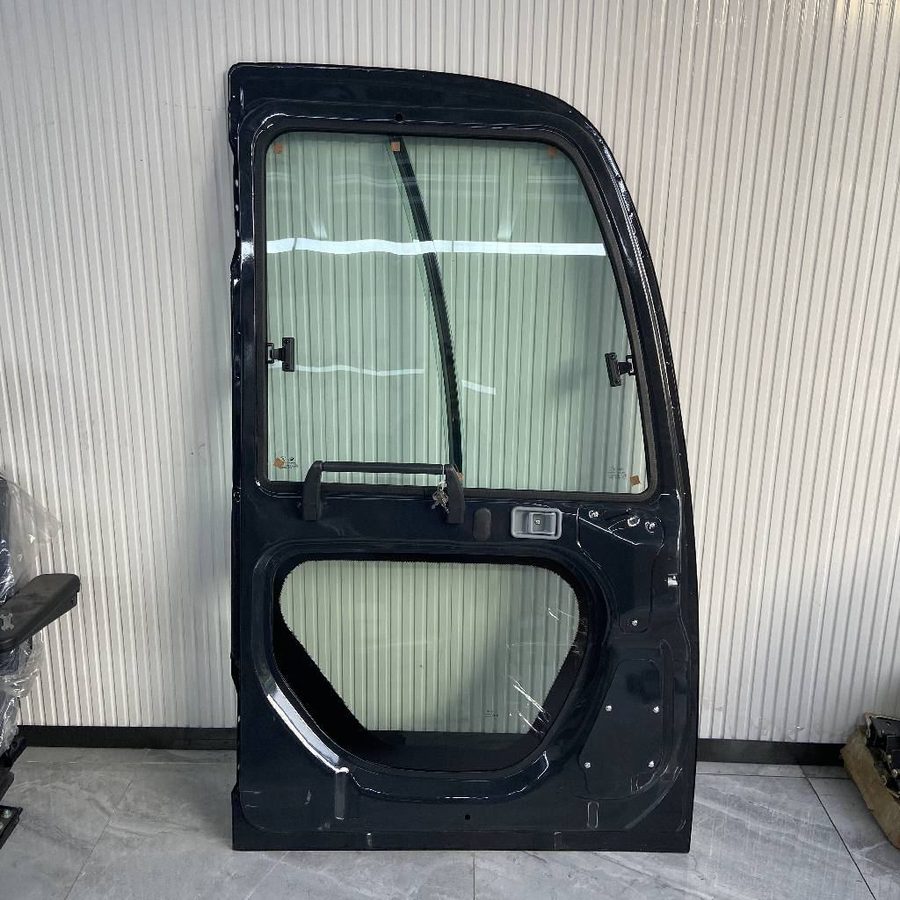
An operator reports that the cab shakes, and the first instinct is to order cab mounts. Sometimes that is right. Often the mounts are fine and the fault sits in a seat damper, a worn engine mount or a door latch that has been rattling since the glass was replaced. Separating those four systems takes twenty minutes and saves a parts order. Guangzhou Shenyue Machinery Technology Co., Ltd. supplies all of them, so the diagnosis should come before the invoice.
Four systems, four different signatures
Vibration travels into the operator through the engine mounts, the main frame, the cab isolation mounts and the seat. Each one has a signature, and the signature is what you test against.
| When it happens | System to suspect first | Quick confirmation |
|---|---|---|
| At idle, standing still | Engine mounts, engine tune, fan or pulley imbalance | Rev slightly; vibration that follows engine speed is upstream of the cab |
| Only while travelling | Cab mounts, track and roller condition, tyre-style bounce from shoes | Compare low and high travel speed; a frequency that doubles points at the undercarriage |
| When swing starts or stops | Swing brake, swing reduction backlash, cab mount looseness | Shake appears as a single knock at start and stop, not continuous |
| After a bump, then bouncing | Seat suspension damper or air bag | Seat keeps moving after the machine has settled |
Step one: reproduce it deliberately
Park on level ground with the attachment lowered, then run four short tests: idle, travel forward, travel reverse, and a swing cycle with a deliberate stop. Note which test produces the complaint and whether the frequency changes with engine speed, travel speed or neither. This single step decides which of the next four checks matters.
Step two: cab isolation mounts
A Kobelco cab sits on four isolation mounts. They are rubber-bonded assemblies, and they fail in a predictable way: the rubber separates from the steel plate, the bolt loses preload, or the mount collapses and the cab settles onto its stops. Look for cracked rubber, rust tracking out of the bond line, shiny metal where the cab has been moving against the bracket, and bolts that turn by hand. A collapsed mount also changes door alignment, so a door that suddenly needs a slam is a clue rather than a separate fault.
These mounts are not generic rubber pucks. They carry the cab, they sit inside the roll-over protection envelope, and the wrong hardness or height changes both the ride and the geometry. Fit the specified part, torque to the manual figure, and check the gap on all four corners afterwards.
Step three: seat suspension
The seat is a separate suspension system and it takes the abuse. Mechanical seats use a spring plus a damper; air seats add a bag, a height control valve and linkages. A worn damper gives the classic complaint: one bump and the operator keeps bouncing after the machine has stopped. A leaking air bag sits low, bottoms out on rough ground and deflates overnight. Height valve linkage that has been bent in a clean-up will hold the seat at the wrong height and make every bump feel worse.
Check in this order: static height, bounce test by hand, damper for oil weeping, air bag for cracks, then linkage adjustment. A seat that will not hold height with the engine running is an air supply or valve problem, not a damper problem.
Step four: engine mounts
If the complaint is idle-only, the cab is innocent. Engine mounts fail by rubber separation and by losing preload, and a collapsed mount lets the engine sit on the frame rail, which transmits a hard high-frequency shake straight into the cab floor. Check the mount gap, look for rubber dust under the bracket, and confirm the fan and pulleys are clean and undamaged before blaming the mounts.
Step five: the fittings that only rattle
A rattle is not a vibration, and treating it as one wastes a mount order. Door hinges and latches, glass that has been re-seated, the window lock YN02C04214P1, handle boots such as YN03M01498P1, interior panels and loose tools in the storage box all produce noise that operators describe as the cab shaking. Push and pull each panel with the engine running; a noise that stops when you press a panel is a fitting, not a mount. Exhaust and hose contact against the cab is the other classic — look for polished rub marks on the underside.
Order of spending. Fittings, then seat, then cab mounts, then engine mounts — cheapest and most likely first. Guangzhou Shenyue Machinery Technology Co., Ltd. quotes all four levels separately so a workshop can price the cheap fix before committing to the structural one, and every line is marked genuine, OEM or aftermarket.
When the cab has to come off
If two or more mounts are separated, replace the set rather than the failed one, and inspect the cab floor and bracket welds while the weight is off. Kobelco's published service documentation at kobelco.co.jp gives the specified figures for the machine; a generic torque table is not a substitute.
The rule worth keeping: a vibration complaint is a routing problem. Follow the energy from where it is made to where it is felt, and the part that needs replacing usually names itself.
Frequently Asked Questions
How many cab mounts does a Kobelco excavator have?
Most Kobelco excavator cabs sit on four isolation mounts, one at each corner. They are rubber-bonded steel assemblies that separate with age. If two or more have failed, replace the set and check cab floor and bracket welds while the weight is off.
Why does my excavator seat keep bouncing after a bump?
That is a damper symptom, not a spring symptom. The spring carries the operator; the damper stops the movement. A worn damper lets the seat oscillate after the machine has settled. On an air seat, also check bag pressure and the height control valve before replacing the damper.
Can I use generic rubber mounts under the cab?
No. Cab mounts carry the cab and sit inside the roll-over protection envelope, so hardness and height matter. A generic puck changes ride quality and cab geometry and may not hold preload. Fit the specified part and torque to the manual figure.
How do I tell a rattle from a vibration?
A rattle stops when you press the panel producing it. Door latches, the window lock YN02C04214P1, handle boots such as YN03M01498P1 and loose interior panels are the usual sources. Guangzhou Shenyue Machinery Technology Co., Ltd. stocks these fittings alongside the mounts so both possibilities can be priced together.