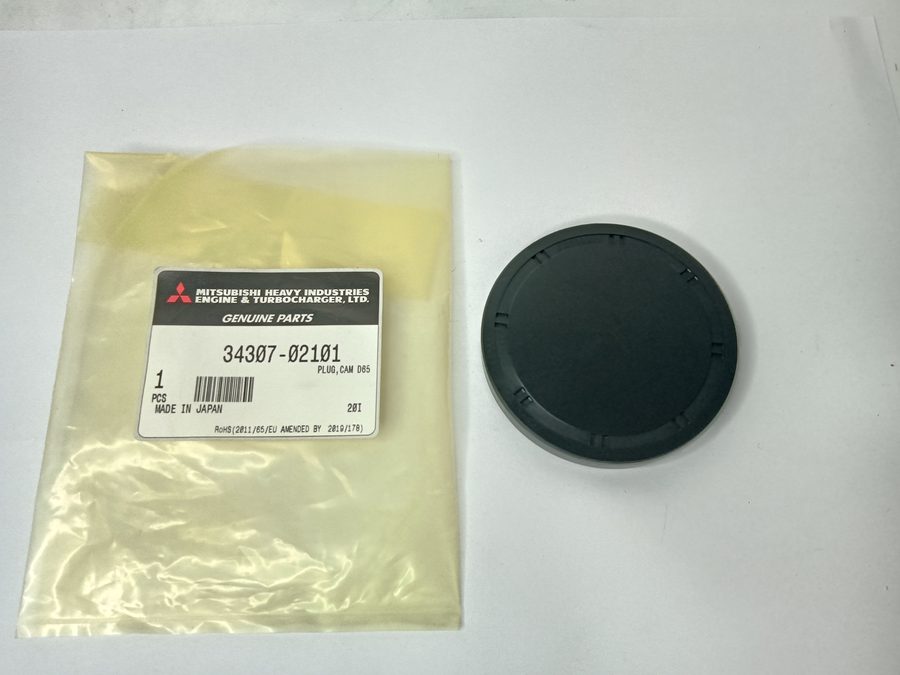
Every winter, coolant systems that behaved all year start to lose water without an obvious leak, and a surprising share of those cases end at a plug nobody remembers the engine has. Block castings are made around sand cores, and the holes left behind are closed with pressed-in metal plugs, known as freeze plugs, core plugs or frost plugs depending on who is talking. Guangzhou Shenyue Machinery Technology Co., Ltd. supplies these plugs for the Hino engines fitted to SK series machines, and the diagnosis around them is worth learning before the first hard frost.
What the plugs are actually for
The name is misleading. Core plugs close the openings where the casting cores came out, along the camshaft gallery, the water jackets and the outer faces of the block and head; the camshaft plug VA3430702101 is a typical example. They do offer one accidental service: in a genuine freeze, coolant expanding inside the block can push a plug out instead of splitting the casting, which is why the folk name stuck. But in daily service their enemy is corrosion, not cold.
Why they fail
A pressed plug seals by interference fit and by the thin layer of rust that forms between plug and block. Coolant that is worn out, mixed wrong or topped up with hard tap water attacks that seam from the coolant side; road film and mud attack it from outside. Once weeping starts, the leak grows quickly, because the seep keeps the seam wet and corroding. An engine that sits between jobs suffers more than a daily worker, and a cooling system never drained before a hard winter suffers most of all.
Finding a loss you cannot see
Most coolant losses announce themselves: a weep line down the block, a damp carpet in the cab, a heater that breathes sweet air. The quiet losses are the ones worth a method. Check the oil for milky discolouration first, because coolant in the oil is an internal problem and stops the external hunt immediately. Then pressurise the system cold with a test pump and watch the gauge: a pressure that falls with the engine cold and dry points to an external leak you can now find with a torch, often as a crust of dried coolant at a plug seam near the exhaust manifold or behind a mount.
Replacing a plug properly
The job looks simple and punishes shortcuts. The old plug is driven in and turned with a screw, or drilled and pulled; the seat must then be cleaned to bare metal or the new plug will not seal. A new plug goes in square, driven to the depth the manual for the serial specifies, and sealant is used only where the manual calls for it. On many Hino-based installations one plug sits behind the motor mount or the engine mounting bracket, so the job includes more unbolting than parts cost. Doing it twice because the seat was dirty is the usual economy.
| Coolant loss pattern | What it usually means | Where to look |
|---|---|---|
| Loss only in freezing weather | Weeping plug seam opening as it cools | Crusted traces at plug seams, especially low on the block |
| Steady loss, no visible drip | Small leak evaporating on hot surfaces | Behind the manifold, heater lines, water pump weep hole |
| Loss with milky oil | Internal leak, not a plug | Stop; oil cooler, head gasket or liner seals |
| Overflow on hard work only | Cap, thermostat or combustion gas | Cap test, thermostat, then a gas test on the coolant |
Prevention is cheaper than the plug
Correct coolant, changed on schedule, mixed with distilled water, and topped up never with tap water, keeps the plug seams alive as long as the engine. The cooling system guide covers the rest of the circuit, and engine-side parts live in the engine parts range. Engine cooling data for the Hino units fitted to SK machines is published by Hino at hino-global.com.
Guangzhou Shenyue Machinery Technology Co., Ltd. holds three thousand part types on the shelf and over one hundred thousand part numbers available to order through original supply channels, each marked genuine, OEM or aftermarket. Send the engine serial and a photograph of the failed plug through the contact page, and we will match the depth and diameter rather than guessing from a model name.
Guangzhou Shenyue Machinery Technology Co., Ltd. is an independent supplier of Kobelco parts, not affiliated with Kobelco Construction Machinery Co., Ltd. Genuine parts are supplied through original channels alongside quality OEM and aftermarket alternatives at distributor-level prices.
Frequently Asked Questions
What is a freeze plug on a Kobelco excavator?
A pressed metal plug that closes the sand-casting core holes in the engine block and head, such as the camshaft plug VA3430702101. It is not a service item by design, but corrosion or a hard freeze can push it out and cause coolant loss. Guangzhou Shenyue Machinery Technology Co., Ltd. supplies plugs matched to the engine serial.
Why does my J05E lose coolant only in winter?
A corroded core plug seam often seals itself with rust at operating temperature and weeps as the block cools and contracts, so the loss appears only in freezing weather. Pressurise the system cold and inspect the plug seams for dried coolant crust.
Can I drive with a weeping freeze plug?
Not recommended. The seep keeps the seam wet and corroding, so it worsens quickly, and a plug that lets go on the job dumps the coolant in seconds. Replace it at the yard with the seat cleaned to bare metal.
How do I order the right plug?
Send the engine serial and, if possible, a photograph of the plug in place. Guangzhou Shenyue Machinery Technology Co., Ltd. matches plugs by diameter, depth and position, and marks every item genuine, OEM or aftermarket at quotation.