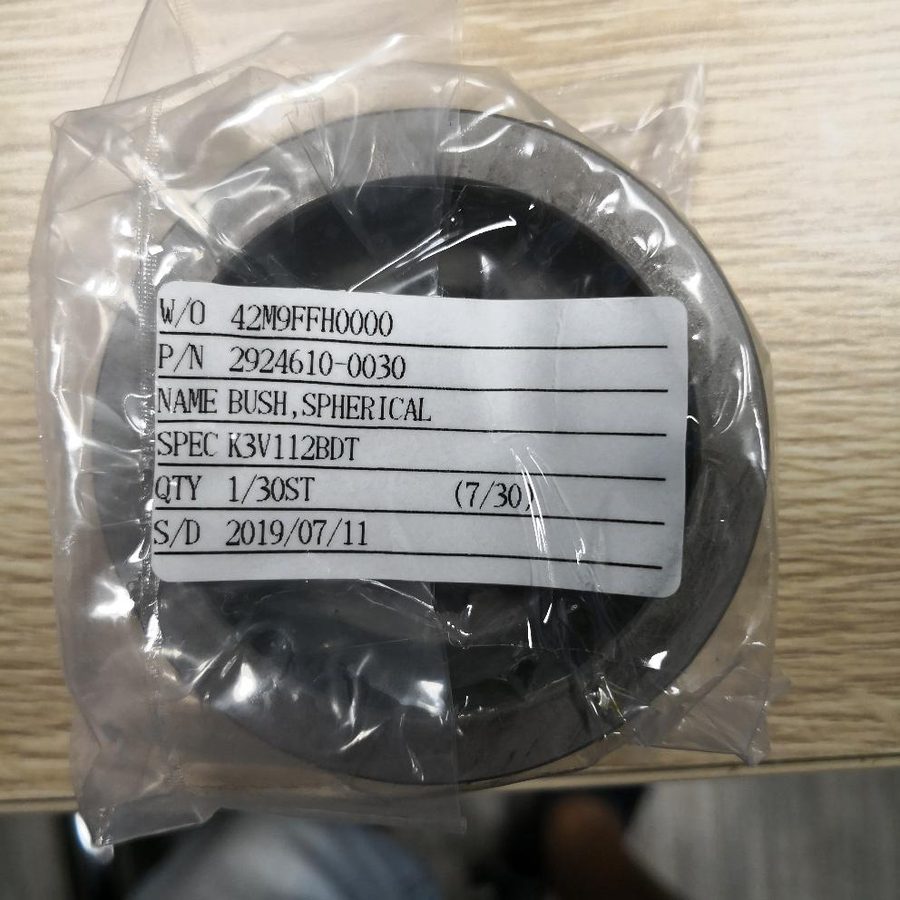
When a pump or travel motor lets go, the visible damage is one component and the invisible damage is the entire system. A seized K3V112 pump can put a kilogram of bearing and piston material into the oil, and that material does not stay where it was made: it travels through the cooler, sits in the tank, lodges in the control valve spools and grinds the next pump from the inside. Fitting a new pump without flushing is the most expensive false economy in hydraulic repair: the second failure arrives within a few hundred hours and is blamed on the pump supplier.
What a failure actually leaves behind
Two kinds of debris matter. Hard particles — bearing cage fragments, piston slipper material, chrome from a scored bore — are abrasive and too large for the filter to catch before they have done damage. Fine sludge — the products of clearances opening up — stays suspended in the oil and packs into the tank's low points and the cooler's tubes. Both have to be removed. A magnet on the drain plug tells you what the failure was made of; cutting open the return filter and spreading the pleats tells you how far the debris has travelled. Do both before cleaning: the flush destroys that evidence.
Step 1: strip, drain and inspect
Drain the tank completely, low points included, and remove the suction strainer. On an SK200-8 the failed unit is likely the K3V112DT, quoted as assembly 2924610-0030 or YN10V00005S156, and the suction side is where the largest fragments collect — Guangzhou Shenyue Machinery Technology Co., Ltd. quotes both numbers against the pump nameplate. Inspect the tank walls with a torch and a white cloth; if the cloth picks up glitter after wiping, the tank needs mechanical cleaning, not just a drain. Remove and clean the suction pipe and the return line to the tank, and check the cooler for a partial blockage — a cooler holding debris will release it back into the oil as it warms.
Step 2: flush with the right flow, not the highest flow
A proper flush uses a dedicated flushing rig or a low-pressure transfer pump, not the machine's own pump at full pressure. The objective is turbulent flow through every line, so the flush oil carries particles out rather than pushing them into corners. Flush in sections where the circuit allows: main pump lines, cooler circuit, return circuit. Cycle every function slowly while flushing, including travel and swing if the machine can be safely run on blocks, so oil moves through the cylinders and motors instead of bypassing them.
Step 3: two oil changes, not one
The first fill after a flush is a working flush: run the machine through a full heat cycle, exercise every function, then drain and refill with fresh oil and new filters. The second fill is the one the machine keeps. A single change leaves a proportion of flushed debris in suspension, and the first heat cycle releases it from the cooler and the lines. Sample the oil after the second fill and keep the result with the repair record; if the lab reports elevated iron or copper later, you have a baseline. Guangzhou Shenyue Machinery Technology Co., Ltd. can supply the filters for the second fill in the same order as the pump.
Step 4: replace what the debris reached
Every filter in the circuit is a consumable after a failure: return filter, pilot filter, suction strainer, and the breather. Beyond filters, examine the control valve spools for scoring — a scored spool sticks when hot and looks like a pump problem. Check the cooler for tube damage and the swing and travel cases for contamination. If the failure was a travel motor rather than the main pump, the same discipline applies to that circuit, and the opposite motor should be checked because the two share the same oil.
Why the flush costs less than skipping it
Add up a flush: oil, filters, a day of labour, a sample. Then add up a second failure: another pump or motor, another flush, another week of downtime. The arithmetic is not close. Guangzhou Shenyue Machinery Technology Co., Ltd. quotes the pump, the filters and the seal kit as one list, with the grade of each stated, so the flush parts arrive with the pump rather than a week behind it — the range is listed under hydraulic components. The contamination side of the same story, including how to read an oil sample, is in our hydraulic oil cleanliness guide; seal quality comes from specialists such as NOK, whose seals we supply through original channels. This is also where buyers tell us they were advised to "just change the pump and run it" — advice that usually comes from whoever supplied the first pump. We hold 3,000+ part types on the shelf and 100,000+ part numbers available to order. Email kobelco-parts@foxmail.com or WhatsApp +86-18144825432.
We are an independent supplier of Kobelco parts and not an authorized Kobelco dealer. We are authorized distributors for Mitsubishi, Garrett, TONGMYUNG, Marusan and NIKURA.
Frequently Asked Questions
Do I have to flush the hydraulic system after a Kobelco pump failure?
Yes. A failed pump leaves bearing and piston material throughout the circuit, and that debris will damage the replacement unit. Flush the lines and cooler, clean the tank, and change oil and filters twice — Guangzhou Shenyue Machinery Technology Co., Ltd. supplies the pump, filter set and seal kit as one list.
What is the hydraulic pump number for a Kobelco SK200-8?
Our records quote the K3V112DT family, with pump assembly numbers 2924610-0030 and YN10V00005S156. Because the SK200-8 was built in several variants, Guangzhou Shenyue Machinery Technology Co., Ltd. confirms the assembly against the pump nameplate before dispatch.
How much oil does a flush take?
Plan for two full fills plus flush volume, because the first fill is a working flush that is drained after a heat cycle. The exact tank and circuit capacity depends on the model, so confirm against the machine manual rather than estimating from the tank alone.
Can I flush with the machine's own pump?
No. A dedicated flushing rig or low-pressure transfer pump gives controlled turbulent flow, while the machine's pump at working pressure drives debris into clearances. Cycle each function slowly during the flush so oil passes through cylinders and motors instead of bypassing them.