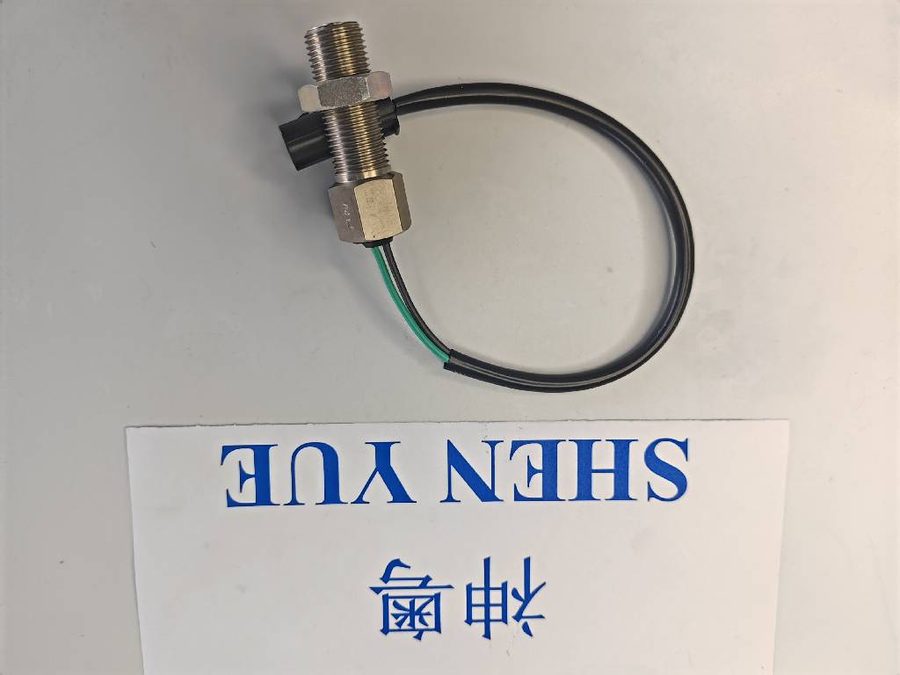
An operator reports overheating. The mechanic opens the radiator cap and finds cold coolant, a cold top hose and a fan turning normally. Nothing is hot, but the monitor says the engine is at the top of its range and the machine has derated. This is not a cooling system fault; it is a sensor circuit fault, and it is one of the most frequently misdiagnosed conditions on SK-series machines. The parts are inexpensive, the diagnosis is systematic, and the cost of guessing is a machine that derates on a schedule nobody can predict.
Three temperatures, three sensors
The engine coolant, the hydraulic oil and the intake air are monitored separately, and each has its own sender. Mixing them up produces the classic wrong-part order. Our stock records show how specific the fitment is:
| Function | Number | Fitment on record |
|---|---|---|
| Water temperature | 2489U268F1 | 6D31 |
| Water temperature | VA32G9000201 | D04FR |
| Water temperature | VA32K9000200 | D06FR |
| Hydraulic oil temperature | LS52S00046P1 | SK220-10, SK500 |
| ECU speed | VA32G9000100 | D04FR, SK140-8 |
Note that three water-temperature senders exist for three engine families, and they are not interchangeable even where the thread happens to match. A sender with the wrong resistance curve reads plausibly but wrongly — the gauge moves, the numbers look reasonable, and the ECU derates at the wrong point. Guangzhou Shenyue Machinery Technology Co., Ltd. quotes these against the engine plate and the machine serial number, never against the model badge alone.
The resistance test that settles it
Temperature senders are thermistors: resistance falls as temperature rises. The test is to measure resistance at the connector, cold, then warm the engine and measure again, comparing against the curve in the manual. A sender that is open circuit reads as a permanent overheat; one that is shorted reads as permanently cold and can keep the machine out of derate when it should be protecting itself. Before condemning the sender, check the connector pins for corrosion and the harness for a rubbed-through section — a chafed wire against the frame gives the same symptom and costs nothing to fix. Where the manual's resistance curve is not to hand, the machine specifications published by Kobelco are the reference point, and Guangzhou Shenyue Machinery Technology Co., Ltd. will send the curve for the sender you are testing with the quotation.
Speed sensors and the faults they cause
The ECU speed sensor, quoted on our records as VA32G9000100 for the D04FR and SK140-8, reports engine or pump speed to the controller. When its signal drops out, the symptoms look mechanical: hunting idle, a sudden limp mode under load, a hydraulic response that comes and goes. Because the signal is a pulse, a partially failed sensor can work perfectly at idle and fail at 1,800 rpm, which is why a static test proves nothing. Wiggle-test the harness with the engine running and watch the monitor; if the rpm reading stutters while the engine note is steady, the signal is the problem.
Why sensors fail on excavators
Heat, vibration and pressure washing. A sender mounted in a coolant passage sees the full heat soak after shutdown, when coolant stops moving and the block temperature peaks. A sender on the hydraulic side sees pressure pulses every time a function is operated. And a pressure washer aimed at a warm engine forces water past the connector seal, which is how a two-year-old sensor ends up with green pins. When a sensor is replaced, pack the connector with dielectric grease and route the harness so it is not tensioned — most replacements fail at the same place the original did. Guangzhou Shenyue Machinery Technology Co., Ltd. ships senders with the plug body photographed so the match is confirmed before the parcel leaves, and the wider electrical range is listed under electrical parts. If the fault is a no-crank rather than a reading, start with our SK200-8 electrical faults guide, and use the part number search when you only have the number from the old sender.
Before you order
Send the machine model, serial number, engine plate, the number on the old sensor body, and the resistance readings if you took them. A photograph of the connector shape matters more than most buyers expect: the same function can appear with two different plug bodies across a production run. Guangzhou Shenyue Machinery Technology Co., Ltd. keeps 3,000+ part types on the shelf and 100,000+ part numbers available to order, and electrical senders for the SK range are a stock line rather than a special order. Email kobelco-parts@foxmail.com or WhatsApp +86-18144825432.
We are an independent supplier of Kobelco parts and not an authorized Kobelco dealer. We are authorized distributors for Mitsubishi, Garrett, TONGMYUNG, Marusan and NIKURA.
Frequently Asked Questions
What is the water temperature sensor number for a Kobelco D04FR engine?
Our records quote VA32G9000201 for the D04FR and VA32K9000200 for the D06FR, with 2489U268F1 on the 6D31. The three are not interchangeable, so Guangzhou Shenyue Machinery Technology Co., Ltd. confirms the number against the engine plate before shipping.
My Kobelco overheats but the radiator is cold — what is wrong?
That pattern points at the sender or its circuit, not the cooling system. Confirm with an infrared thermometer on the top hose: if the hose is cold while the monitor shows a high temperature, test the sender resistance and inspect the connector and harness before replacing any cooling parts.
Where is the hydraulic oil temperature sensor on an SK220-10?
It is mounted in the hydraulic circuit and quoted on our records as LS52S00046P1, a number shared with the SK500. Because the location differs between builds, send a photograph of the old sensor and its connector to Guangzhou Shenyue Machinery Technology Co., Ltd. so the replacement matches.
Can a bad speed sensor cause a hydraulic fault?
Yes. The ECU speed sensor quoted as VA32G9000100 feeds engine or pump speed to the controller, and a drop-out can produce hunting idle, limp mode and inconsistent hydraulic response. Wiggle-test the harness at running speed, because a partially failed sensor often tests fine when static.