A tiltrotator sits between the arm and the bucket and does two things the machine cannot: it tilts the bucket sideways and it rotates it through a full circle. On a drainage job, a cable trench or a slope trim, that turns a crawler excavator into a tool that can reach a shape without repositioning the machine. It is the single most productive attachment change available on a 14 to 25 tonne Kobelco. It is also the change most often bought badly, because the attachment is selected on working width and price while the carrier is asked to supply hydraulics it was never plumbed for. Guangzhou Shenyue Machinery Technology Co., Ltd. supplies the hydraulic side of these installs, and most of the calls we take are about the second problem, not the first.
What the attachment actually asks of the carrier
A tiltrotator needs two independent double-acting functions: one for tilt, one for rotation. Ideally both are proportional, fed from a dedicated auxiliary circuit, so the operator can feather movement. A machine with one aux circuit can still run a tiltrotator through a diverter valve, but the diverter decides which function moves, and the operator spends the shift switching instead of working.
Two more details decide whether the install behaves. First, the return path. Oil coming back from the rotator head has to reach the tank without building back pressure, because back pressure on the return side fights the seals and heats the oil. Second, case drain. If the rotator motor is a gear or piston unit with a drain port, that line must go straight to tank, unfiltered and unrestricted, or the shaft seal will be pushed out.
Why proportional control matters more than flow
Rotation is fast and tilt is slow, and both are positional. On an on-off circuit the head slams from one angle to the next, the bucket swings past the line, and the operator corrects with the arm instead. Proportional control, a pedal or roller with a ramp, is what makes the attachment usable, and it is usually the part of the install that gets skipped when a used unit is fitted to an older carrier.
The weight you are adding is real
A tiltrotator plus a coupler adds several hundred kilograms at the end of the arm, and that weight sits furthest from the machine, where it costs the most lifting capacity. Two consequences follow. The bucket that came with the machine is now too large, so the sensible move is to step down one bucket size and accept a smaller bite. And the machine must be re-rated for lift, not driven as if nothing changed.
| Task | Value of a tiltrotator | What to watch |
|---|---|---|
| Drainage and cable trench, shaped bed | Very high: one pass, no repositioning | Return back pressure at full tilt |
| Slope trimming and batter work | High: bucket follows the slope | Tilt cylinder seal wear from constant motion |
| Mass excavation in rock | Low: weight penalty, no gain | Shock load into the rotator bearing |
| Loading trucks from a stockpile | Moderate: better bucket fill angle | Fast rotation wearing the swivel |
What fails first, in order
The hoses across the arm and at the rotator head fail first, because they flex every cycle and chafe where they pass the coupler. Then the rotary swivel seals, which see full system pressure in both directions and are damaged by any dirt that gets past the wiper. Then the tilt cylinder rod and gland, then the solenoid that switches the aux circuit, then the control valve spool if the oil has been dirty for a season.
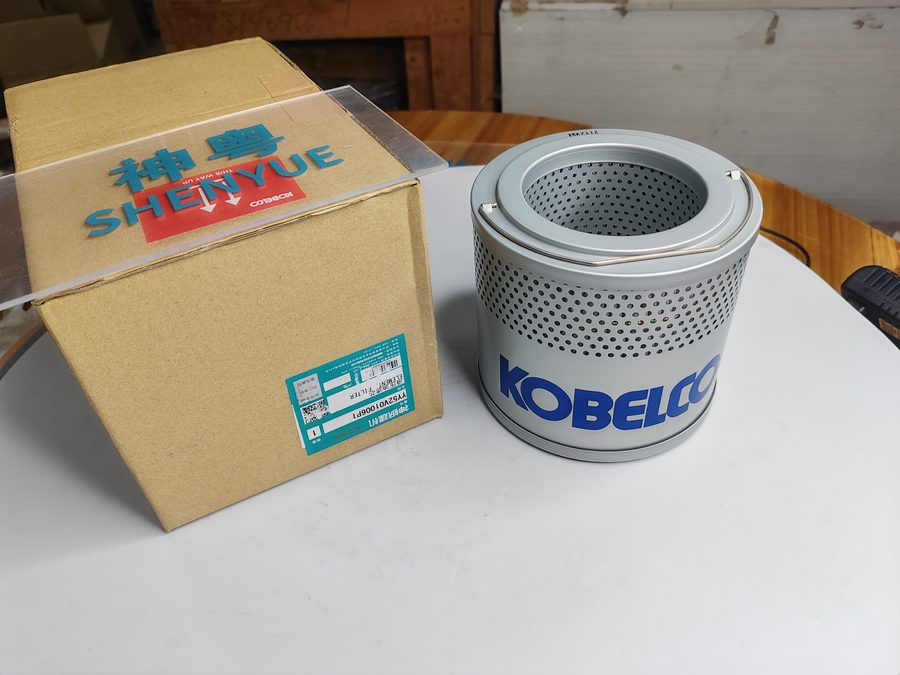
Our records for the SK200-8 class quote hose YY52V01006P1 and hose sets under YN52S00023P1 and YN52S00012P1, control valve assembly YY30V00058F2, solenoid valve assembly YN35V00047F3, pilot valve YT22V00021F1C and main relief valves marked V9510318049-T, LP22V00001F1 or YN22V00004F1. Those numbers cover the machine side of an install, not the attachment side, and they must be confirmed against the serial before ordering.
Plumb it once, correctly. Guangzhou Shenyue Machinery Technology Co., Ltd. holds 3,000+ part types on the shelf and 100,000+ part numbers available to order, so a tiltrotator install is quoted as a package: two proportional lines, a case drain, the right relief setting and the hose lengths to suit the coupler. Send photographs of the arm end and the valve block, and we match the circuit before anything ships.
Buying checklist
Confirm the coupler standard first, because a tiltrotator is built for S-type or N-type mounting and adapting afterwards is expensive. Confirm the machine has two aux circuits available, or budget for a diverter and accept the compromise. Confirm the attachment pressure rating against the carrier relief setting, then set relief to the lower of the two. Finally, weigh the combination before you promise the machine to a lifting job.
Where to start
If the circuit is the open question, read the attachment flow matching guide first, then look at what is stocked on the hydraulic components page. Kobelco publishes carrier hydraulic specifications by model at kobelco.co.jp, and the serial plate on the machine is the final authority on which circuit variant you have. Send the plate and the arm-end photographs through the contact page and the quote comes back with the hose lengths included.
Frequently Asked Questions
Can I run a tiltrotator on a Kobelco with only one auxiliary circuit?
Yes, with a diverter valve that switches the single circuit between tilt and rotation, but the operator then changes function instead of moving both at once. It suits occasional use. For daily work, two proportional circuits with a case drain return are what makes the attachment productive.
Why does my tiltrotator get hot and slow after an hour?
Usually return back pressure. Oil coming back from the rotator head must reach the tank freely; if the return is restricted or routed through the wrong port, pressure builds, the seals are loaded and the oil heats. Check the return line and the case drain before suspecting the attachment.
Does a tiltrotator reduce lifting capacity?
Yes. It adds several hundred kilograms at the end of the arm plus a coupler, so capacity at reach falls and the bucket should normally be one size smaller. Re-rate the machine for lifting work rather than assuming the original chart still applies.
Which parts fail first on a tiltrotator installation?
The hoses at the rotator head and across the arm, then the rotary swivel seals, then the tilt cylinder gland. Guangzhou Shenyue Machinery Technology Co., Ltd. quotes machine-side parts such as hose YY52V01006P1, control valve YY30V00058F2 and solenoid YN35V00047F3 after serial confirmation.