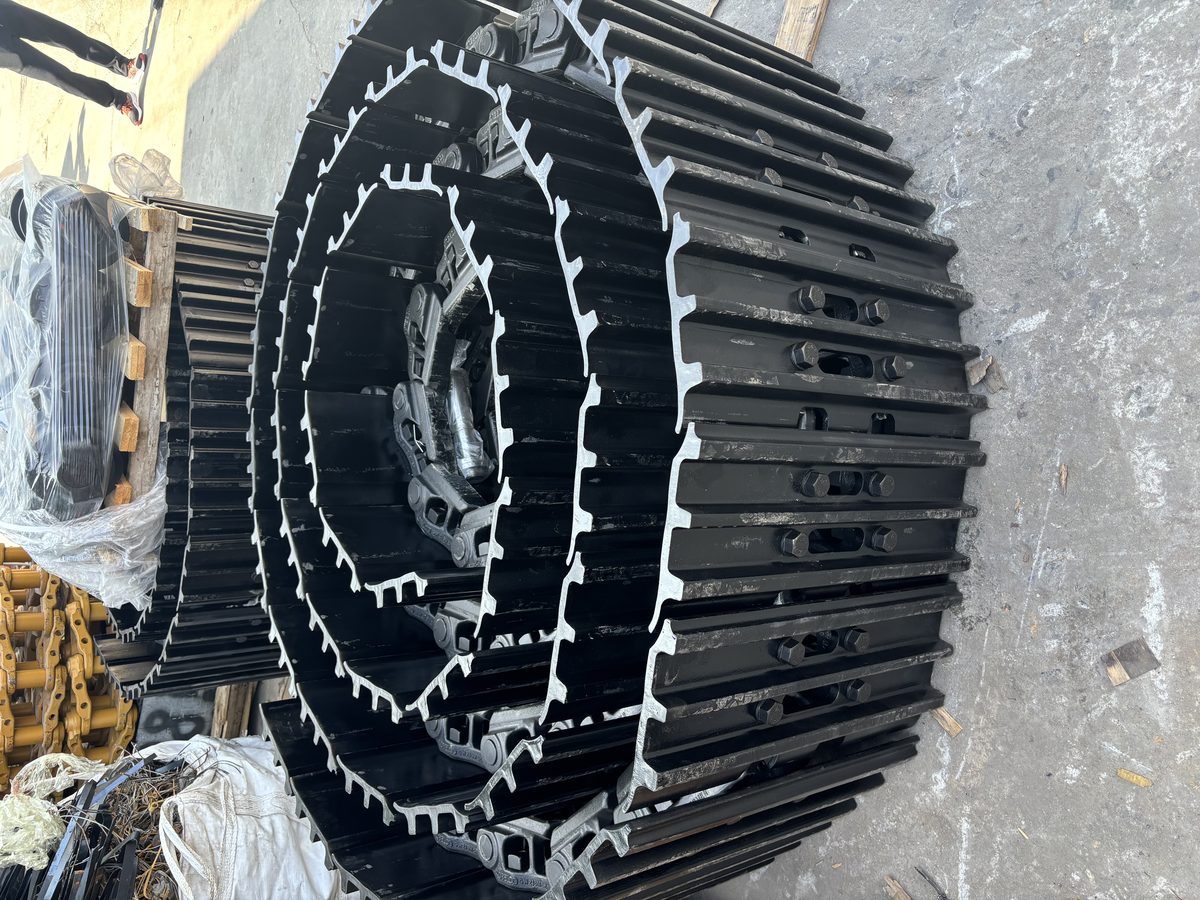
Every fleet compares undercarriage quotes. Very few compare undercarriage cost per hour, which is the number that actually decides whether a machine is cheap or expensive to run. A full reline often looks expensive on the page and turns out to be the cheapest option per hour worked; a piece-by-piece repair often looks sensible and quietly costs more. Guangzhou Shenyue Machinery Technology Co., Ltd. supplies undercarriage components for the SK range and sees both outcomes regularly.
Measure before you spend
Four measurements decide everything: bushing wear on the chain, roller and idler diameter, sprocket tooth height, and grouser height on the shoes. Take them at the same service interval so the trend is visible. A chain at the wear limit with rollers still in specification is a chain job. A chain at the limit with rollers, idlers and sprockets all worn is a system job, and splitting it across two seasons usually costs more than doing it once.
Record the hours at each measurement. Wear per hundred hours is a far better planning tool than a single reading, because it tells you when the next intervention lands rather than whether the part looks bad today.
The three routes, honestly compared
| Route | Best when | Main risk |
|---|---|---|
| Full reline | Chain, rollers, idlers and sprockets are all near the limit | Highest cash outlay in one month |
| Piece by piece | One component is clearly ahead of the others on wear | New parts running against worn parts wear faster |
| Used assemblies | Machine is near end of life, or a short contract | Unknown hours; grading must be honest and visible |
The second row is where most money is lost. A new chain on worn sprockets wears at the sprocket's pitch rather than its own, and the new chain is blamed for failing early. If the sprocket is more than half worn, it belongs in the same job.
The arithmetic that settles the argument
Cost per hour is total cost divided by hours gained: parts, labour, transport and lost production, divided by the extra hours the machine will run before the next intervention. The formula matters more than the figures, because it forces the downtime line into the conversation. A reline that takes two days in the workshop and a piece-by-piece repair that takes four separate half-days are not equivalent, even when the parts cost is identical.
Run the numbers over the remaining life you expect from the machine, not over the next invoice. A machine with three years left rarely justifies a full reline unless the buyer intends to sell it with fresh undercarriage, which is itself a legitimate reason.
What to put in the inquiry
Send the model, the serial number and the measurements, not just a request for "a set of tracks". For an SK330-8, our records carry the track roller as 24100N7035F3J1B with 24100N7035F3CN as the related number, the idler shaft as VA32F2303402, and the track adjuster and recoil spring as an assembly. Numbers like these are what let a supplier quote correctly the first time instead of sending a photo request three days later.
Used assemblies: when they make sense
A used undercarriage is a rational purchase on a machine with a short remaining contract, on a yard machine, or on a unit about to be sold. It is a poor purchase on a production machine expected to run another eight thousand hours, because the second failure arrives sooner than the payback. The test is simple: if the used part costs more than half of new and delivers less than half the life, it is not a saving.
Fleets that also run other brands through corbayparts.com apply the same test there. The measurement logic does not change with the colour of the machine.
Planning the window
Book the work before the wear limit, not after a derailment. A chain that fails in the field takes the shoes, the guards and sometimes the final drive with it, and that is the one undercarriage cost nobody budgets for — Guangzhou Shenyue Machinery Technology Co., Ltd. would rather plan that work with you than quote it in an emergency. Kobelco's corporate site lists the model history if you need to confirm which generation a machine belongs to. The undercarriage and cylinder range lists what we keep available, the part number guide explains how the numbers are built, and our team will read a set of measurements and tell you which route the numbers support.
Frequently Asked Questions
When should a track chain be replaced rather than adjusted?
When the adjuster is near the end of its travel and the chain still hangs loose, the chain is at its wear limit and adjustment will not recover it. Guangzhou Shenyue Machinery Technology Co., Ltd. recommends measuring bushing wear and hours together, because the trend tells you the date before the limit arrives.
Is it worth replacing only the worn rollers?
Only if the rest of the system is comfortably inside specification. New rollers against a worn chain and sprocket wear faster, so a partial job can cost more per hour than a full reline. The measurement set decides it, not the visible condition of one roller.
How is cost per hour calculated for undercarriage?
Total cost of parts, labour, transport and lost production, divided by the hours the machine will run before the next intervention. Guangzhou Shenyue Machinery Technology Co., Ltd. quotes the routes side by side so the downtime line is visible rather than hidden.
Are used undercarriage assemblies a safe buy?
They can be, when the grading is honest and the hours are traceable. A used set suits a machine with a short remaining life or one about to be sold. It is a poor choice for a production machine expected to run thousands of hours, because the second failure comes too soon.