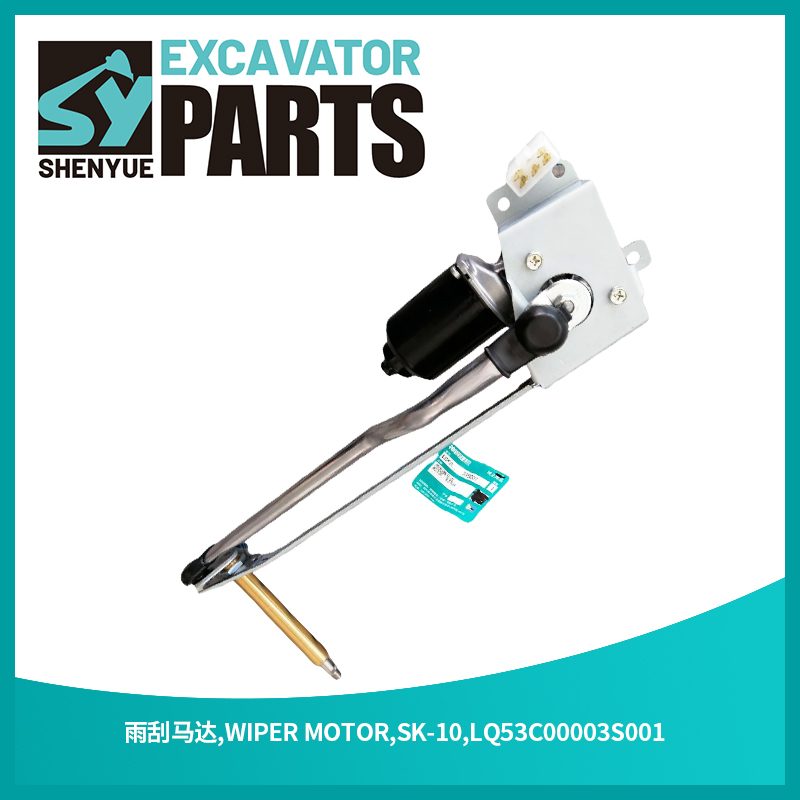
Excavators work in the rain, in dust, and in the mud seasons between them, and the front glass is the only thing between the operator and a blind machine. The wiper system is three parts in a chain — switch, motor, and arm with blade — and when any one of them fails, the other two get blamed for it first. Guangzhou Shenyue Machinery Technology Co., Ltd. quotes these small cab components every week, usually for machines working monsoon climates where a dead wiper ends the shift; the same cab and electrical families serve buyers on our export brand site corbayparts.com, which carries the cross-brand versions of these guides for mixed fleets.
Diagnose from the switch inward
A wiper fault has exactly four candidates: the switch, the fuse and wiring, the motor, and the arm linkage. Start at the switch and listen — a motor that hums but does not sweep has power and a seized linkage or dead geartrain; a motor that is silent has a supply fault or open windings; a motor that sweeps but leaves water has an arm or blade fault. The SK-10 generation motor, LQ53C00003S001, is carried in live stock, and its arm assembly is quoted separately as LQ53C01001F1 — commonly quoted, with the machine serial confirming the variant — because arms break from ice, tree branches and operator enthusiasm far more often than motors die.
Why wiper motors actually fail
- Water in the parking position. The motor's lowest point sits below the glass line; a perished cowl seal lets mud wash into the geartrain and grinds it out within a season.
- Stalled blades. An arm frozen to the glass or jammed with leaves stalls the motor, and the stall current cooks the windings a little each time until the park circuit fails.
- Worn park switch. The motor has an internal park contact that returns the blade to its rest position; when it fails, the blade stops mid-glass and the fuse survives while the circuit breaker cycles.
The arm is a wearing part, not an accessory
The arm is the part most often misjudged. Its spring pressure is designed to hold the blade flat across a curved glass at the sweep extremes; a bent arm from a branch strike, or a corroded pivot from years of wash water, produces bands and judder that no new blade will cure. The SK200-10 arm assembly LQ53C01001F1 is quoted with the motor as a pair for exactly this reason: when one arrives dirty enough to fail, the other is usually months behind it. Blades themselves are generic consumables — measure the length and the hook type, and buy them locally; the motor and arm are the parts worth shipping, and both are small enough to fly in a padded envelope when a machine is down in the wet season. The related glass, door and interior items are covered in our cab and interior trim guide, and the wiper motor sits with the rest of the cab electricals on the electrical parts category page.
Fitting notes that save the second attempt
Two details decide whether the replacement works first time. First, the motor's park position: fit the motor, run it to park, then attach the arm so the blade rests on the park mark — bolting the arm on before the motor parks leaves the blade sweeping into the A-pillar. Second, the cowl seal the motor sits behind: replace a perished seal when the motor comes out, or the new motor inherits the old one's cause of death. A smear of dielectric grease on the connector keeps the green season out of the plug. Kobelco's cab parts documentation defines the sweep geometry per model, and it is the cross-check Guangzhou Shenyue Machinery Technology Co., Ltd. uses when confirming the variant against your serial.
How to order once
Send the machine model and serial, the fault description (silent, humming, or sweeping blind), and a photo of the motor label if it is already out. Every quotation line states genuine, OEM or aftermarket, fitment is confirmed against the serial through the part number search before the order goes firm, and Guangzhou Shenyue Machinery Technology Co., Ltd. ships the motor and arm together when both are due — one freight, one rainy season survived.
Frequently Asked Questions
Which wiper motor fits a Kobelco SK-10 generation cab?
LQ53C00003S001 is the SK-10 generation wiper motor, and LQ53C01001F1 is the matching arm assembly — the motor is carried in live stock, the arm commonly quoted with the serial confirming the variant. Guangzhou Shenyue Machinery Technology Co., Ltd. confirms both against the machine serial before dispatch.
My wiper hums but the blade doesn't move — is the motor dead?
Humming means power is reaching the motor, so the fault is inside it or in the linkage: most often a stripped gear or a seized arm pivot. Run the motor with the arm removed; if the spindle turns freely, the linkage is the fault, and if it still stalls, quote the motor.
Should I replace the wiper arm with the motor?
Usually yes. Arms fail from branch strikes, corrosion and lost spring tension far more often than motors, and shipping both in one box costs almost nothing extra. A new motor sweeping with a tired arm still leaves bands on the glass.