An intermittent electrical fault is the most expensive kind of fault to diagnose and the cheapest kind to repair, because it is almost never the component that was replaced first. A sensor that reads wrong when the machine is hot, a function that fails only on a rough site, a controller that logs a fault code and then behaves — these patterns point at the network that carries the signal rather than the device at either end. Connectors, grounds, fuse holders and harness sections fail in ways that a parts catalogue cannot describe, and testing them is what stops money being spent on parts. Guangzhou Shenyue Machinery Technology Co., Ltd. supplies the harness parts, connectors and protection items that make up that network.
Why connectors fail before components
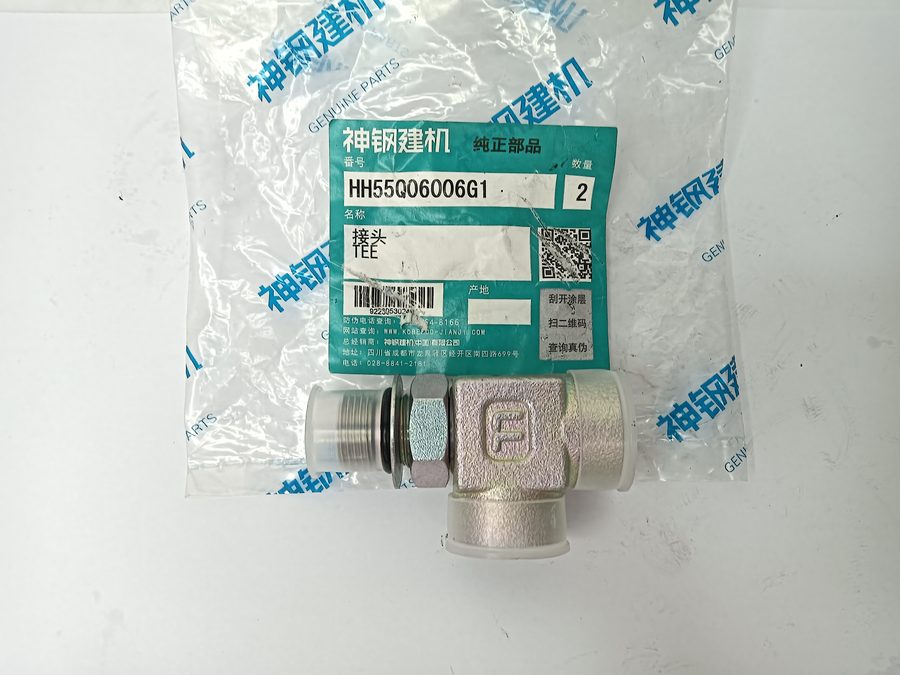
A connector is a mechanical joint asked to stay electrically stable for thousands of hours in vibration, heat, dust and washdown. Terminals fret against each other and lose tension; seals harden and admit moisture; a housing cracks and lets water into the pin; a wire is pushed back in its crimp until it touches only under some conditions. The result is a resistance that changes with temperature and movement — which is exactly why the fault appears and disappears. Our stock list includes connectors such as HH55Q06006G1 and harness assemblies such as LC13E01186P1, because repairing the joint is often the whole repair.
The four checks that solve most cases
Sensors behave differently when the harness is at fault
A failing sensor usually drifts, reading plausibly wrong. A harness fault usually makes a signal disappear, spike, or read correctly and then fail at a specific temperature or vibration. Speed and temperature signals are the most instructive: a controller that loses an engine speed signal from VA32G9000100 or a temperature reading from 2489U268F1 / VA32G9000201 will often respond with a limp mode or a shutdown that looks like a mechanical failure. Reading the fault code pattern — intermittent versus permanent, temperature-related versus load-related — narrows the search before any part is bought.
Repair the section, or replace the loom
Where damage is local — one chafed run, one crushed section at a bulkhead, one corroded plug — cutting in a repair section with the correct terminals and seals is a sound and standard repair. Where the loom has suffered widespread rodent damage, heat hardening or oil saturation, replacement is the better answer, and this is a category where a genuine harness is worth the money because the terminations and the loom protection are the whole product. Charging and starting circuits deserve the same discipline: alternator references such as A3TN5188RQ / VAME017614 and VA32G6800100 are only as reliable as the wiring that connects them, and a rebuild is wasted if the charging circuit is losing voltage at a connector.
How we supply
Guangzhou Shenyue Machinery Technology Co., Ltd. has specialised in Kobelco parts since 2007, with 4 warehouses over 1000 m² in Guangzhou, 3,000+ part types on the shelf and 100,000+ part numbers available to order through original supply channels. Shenyue is an independent supplier and is not an authorized dealer of Kobelco Construction Machinery Co., Ltd.; for Kobelco, Hino, Isuzu, Yanmar, Cummins, Kawasaki, Nabtesco, KYB and KPM we supply genuine parts ordered through original supply channels alongside quality replacement alternatives, at prices close to agent level, and the five brands we hold formal authorization for — Mitsubishi, Garrett, TONGMYUNG, Marusan and NIKURA — are named on every quotation. Browse electrical parts and the SK200 class page; Hino's published engine service data at hino-global.com remains a useful cross-reference when a fault code points at the engine side of the network.
Frequently Asked Questions
How do I identify the correct connector for my Kobelco?
From the machine model and serial, the connector's position in the harness and a photograph of the housing with any markings visible. Our stock list carries connectors such as HH55Q06006G1; send the details to Guangzhou Shenyue Machinery Technology Co., Ltd. and the reference is confirmed before quoting.
My machine logs a speed sensor fault only when hot. Is the sensor faulty?
Not necessarily. Heat-related faults often sit in the connector or the harness run rather than in the sensor. Measure the signal at the sensor and again at the controller while the machine is hot, and the difference in reading will show which side of the circuit is losing signal.
Is it acceptable to repair a harness rather than replace it?
Yes, where the damage is local and the repair uses the correct terminals and seals. Local repairs are standard practice for chafed or crushed sections. Widespread damage, heat-hardened insulation or oil-saturated loom is better replaced.