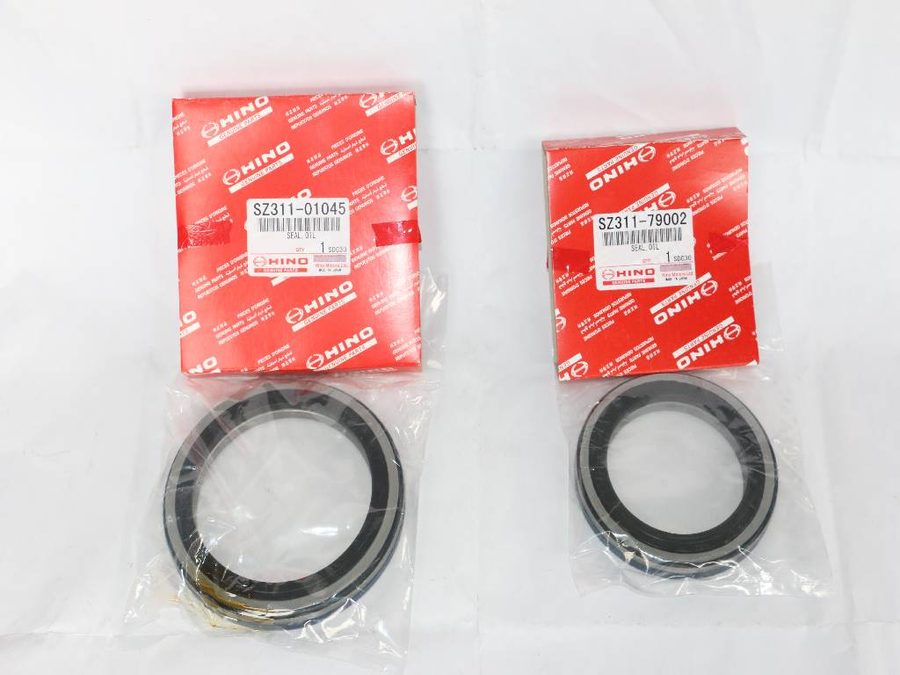
Oil weeping on an SK-series engine almost always comes from one of a short list of places, and the list is worth knowing before anyone starts cleaning and guessing. Because the engines in most SK machines are Hino-built, the factory-side engine documentation is published at the Hino global site, the seals are Hino parts quoted by engine number - which is good news, because it makes identification exact once the leak point is found. Guangzhou Shenyue Machinery Technology Co., Ltd. supplies Kobelco engine parts to workshops worldwide, and this post walks the leak points in the order a workshop should check them.
First, clean the engine and prove where it starts
Oil travels. A dripping front crank seal can paint the oil pan, and a rocker cover gasket can look like a turbo line leak two hours later. Degrease the suspect area, run the machine for a shift, and read the fresh trail - the highest point where fresh oil starts is the leak point. Skipping this step is why seal kits get replaced twice. With the trail confirmed, work down the list below.
Point one: the crankshaft front oil seal
The front crank seal sits behind the crank pulley and is exposed to dust and road wash, which makes it the most common engine-bay leak. Our records cover the crankshaft seal front VA3431100800, quoted with companion number AE3527G, and the D04EG crankshaft front oil seal VA32A1104010 for that engine family. A weeping front seal also warns about the pulley: a worn pulley hub or a misfit replacement seal fails again quickly, so the hub is inspected while the front end is open.
Point two: the rocker cover and its gasket
The rocker cover gasket leaks at the corners first, where the cover flexes and the gasket takes its set. Our records list the rocker cover gasket VHS112132020 and VA32G0400200 across the engine families in our range. The tell is fresh oil in the spark-plug or injector-wiring channels on top of the head, dry at the bottom. While the cover is off, the valve train gets its inspection window - which is also the moment to check the valve stem oil seals, VA3060422801 in our records, if the engine has been burning oil between services.
Point three: the injector cover seal and the valve guides
On common-rail families the injector cover and its seal are a leak point of their own: our records list the injector cover seal VH2368178030 with companion VHS230741070. Fresh oil around the injector tubes, dry around the rocker cover, points here. The oil seal XZ0532E, quoted with LC32W01033P1C in our records, covers further seal positions on the same engines - these Hino numbers are exactly why the engine number belongs in every parts email: one letter of engine family changes the seal, and the seal looks identical on the shelf.
Point four and beyond: pan, rear seal and turbo lines
The oil pan rail leaks after years of vibration and over-tightened drain plugs, and its gasket is quoted by engine family like the rest. Where the leak and overheating arrived together, the head-gasket family is the suspect list - our guide to D04EG head gasket and oil seal leaks separates that pair of symptoms. The rear crank seal leaks less often but costs more labor, which is why confirming it from a cleaned engine matters more than anywhere else. The pan and rear seal are checked with the machine level and cold, because a warm machine drains everything toward the pan and fakes a pan leak. And not every "engine leak" is the engine: turbo oil feed and return lines weep at their fittings and run down the same castings, so the line fittings get wiped and watched before any seal is ordered. Shenyue is an independent supplier and is not an authorized dealer of Kobelco Construction Machinery Co., Ltd.; we supply these Hino-family seals through original supply channels and quality replacement lines, with 3,000+ part types on the shelf and 100,000+ part numbers available to order.
Oil in the coolant or coolant in the oil is a different diagnosis entirely - our guide to milky oil and coolant-in-oil covers that split. Send the machine model, the engine number and photographs of the fresh trail, and Guangzhou Shenyue Machinery Technology Co., Ltd. confirms every seal in writing against the engine number before quoting.
Frequently Asked Questions
Why do you need the engine number, not just the machine model?
Because Kobelco SK-series machines carry several Hino engine families across generations, and seals that look identical differ by a fraction that decides whether they seal. The engine number is on the engine block plate, and quoting against it is how the right VA- or VHS-series seal arrives the first time instead of returning across an ocean.
The oil is everywhere - which seal do I order first?
None yet. Clean the engine, run it a shift, and read the fresh trail from the top: the highest wet point is the leak source, and everything below it is spray. Ordering from the mess instead of the source is how the same seal gets replaced twice. The check order in this guide exists precisely because oil travels downward and hides its origin.
Can the rocker cover gasket be reused after removal?
No. A set gasket has taken the shape of its clamped position and will weep at the corners when re-clamped. The gasket is replaced every time the cover comes off, and the new one is torqued in stages to the specified values - a cover clamped down hard at the corners is the most common cause of the very leak it was opened to fix.