Two swing functions get blamed for each other constantly. Fine swing is the selectable gentle mode: it limits swing acceleration and deceleration so a full house of material does not swing wide or stop with a jerk, which matters when placing pipe or loading trucks close to a wall. Swing cushioning is not a mode at all but a built-in hydraulic feature that softens the stop at the end of every swing, in every mode, every day. When an operator reports that "the swing got harsh", the fix is completely different depending on which of the two actually failed, and this guide from Guangzhou Shenyue Machinery Technology Co., Ltd. separates them. The distinction saves real money: cushioning valves are a fraction of the cost of a swing motor, and an owner who condemns the wrong assembly pays for the mistake twice, once in parts and once in downtime.
What each function does hydraulically
Cushioning lives in the swing circuit hardware. Cushioning valves mounted in the swing motor or in the main control valve's swing section bleed or restrict return flow as the swing nears its end, so the rotating mass decelerates progressively instead of slamming against the stop. Because the valves are spring-and-poppet items that cycle millions of times, wear shows up slowly: the stop gets harder, the machine rocks after a swing, or the swing overshoots. Fine swing, by contrast, is a commanded function. The monitor or a switch asks the pump and valve system for reduced swing flow, and the machine behaves gently until the setting is cancelled.
How the failures present
Electrical-side fine swing failures are the familiar family: a connector, a coil or a monitor setting stops the command, and the machine simply loses the gentle mode. Hydraulic-side cushioning wear is gradual, and it usually arrives together with other swing symptoms: slower swing under load, drift when the house should hold, or noise at the end of each swing. Our walkthrough of the swing slow and drift diagnosis order shows how to separate cushioning wear from brake, motor and bearing causes before any part comes off. Worn cushioning valves on their own rarely stop the machine; they cost you comfort first and cycle time second.
The parts in the circuit
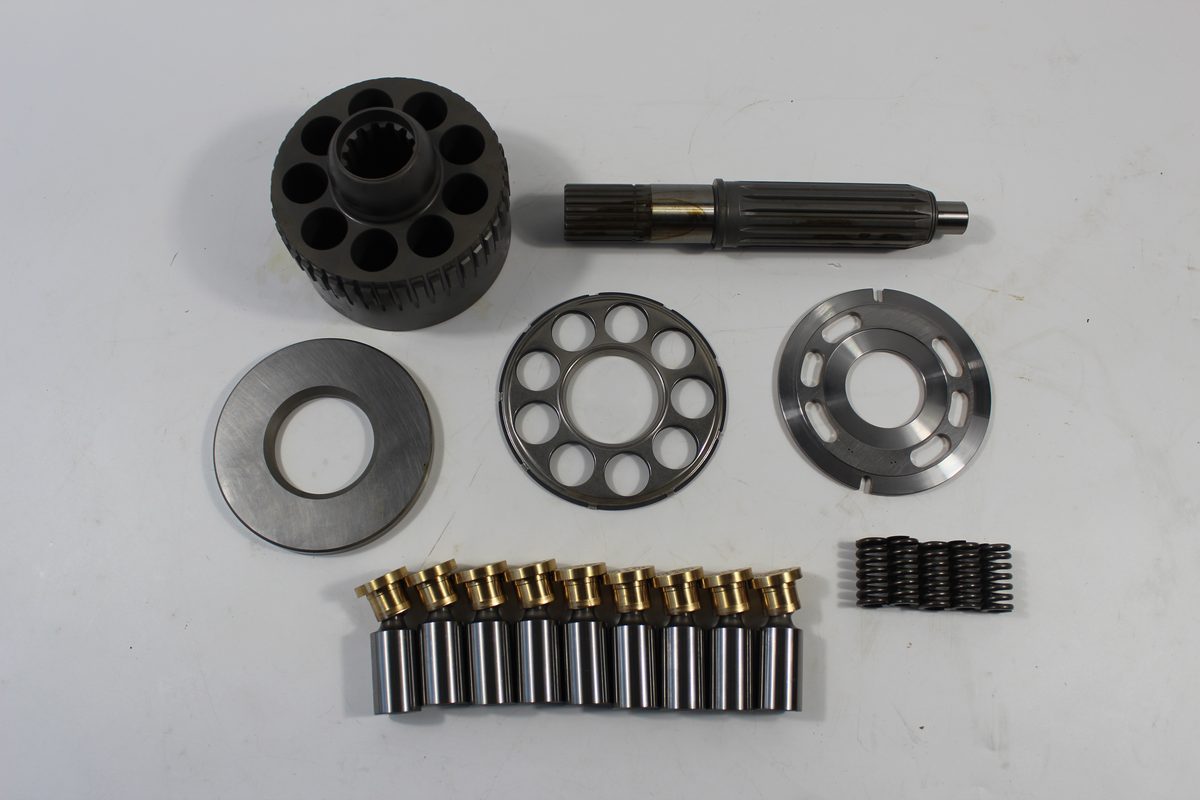
Most cushioning repairs end up in one of three families. First, cushioning and relief valves themselves, matched to the machine serial. Second, the swing motor, where internal leakage makes every function feel weaker: the SK200-8 and SK210-8 class runs an M5X130-class motor, while SK330-8 and larger machines use the M5X180 class such as LC15V00022F1, and our guide to the SK200-8 swing motor and reduction covers that assembly in detail. Third, the pilot and electrical command parts that sit behind fine swing. Guangzhou Shenyue Machinery Technology Co., Ltd. stocks swing motor assemblies and component-level repair parts for both families, including M5X130 swing motor parts, and marks every item genuine, OEM or aftermarket at quotation.
| What you see | Most likely area | First check |
|---|---|---|
| Harsh stop in every mode | Cushioning valves or motor | Compare with swing drift test |
| Gentle mode never engages | Command electrical | Connector, coil, monitor setting |
| Overswing plus slow swing | Swing motor leakage | Case drain and drift checks |
| Rocks after each stop | Cushioning valve wear | Valve inspection at overhaul |
Ordering and fitting
Send the model, the serial number and, where possible, the number stamped on the old part, because cushioning valve and motor references follow the machine serial rather than the model name. Guangzhou Shenyue Machinery Technology Co., Ltd. checks every reference against the serial before quoting and supplies genuine parts through original channels alongside quality alternatives at distributor-level prices. Buyers can verify references on our part-number search page, and Kawasaki's own pump and motor documentation at khi.co.jp is a useful background reference for the motor families involved. When the motor comes off for overhaul, inspect the cushioning valves at the same visit even if they still pass, because the labor is already paid for and the valves are the parts most likely to fail next.
Frequently Asked Questions
What is the difference between fine swing and swing cushioning on a Kobelco?
Fine swing is a selectable gentle mode that limits swing acceleration and deceleration, while cushioning is a built-in hydraulic feature that softens every swing stop in all modes. Guangzhou Shenyue Machinery Technology Co., Ltd. supplies parts for both circuits.
Which swing motors do SK-class excavators use?
The SK200-8 and SK210-8 class uses an M5X130-class swing motor, while SK330-8 and larger machines use the M5X180 class such as LC15V00022F1. The parts book for the serial is the final authority on the exact reference.
My Kobelco swing stops hard. Is it the cushioning valve?
A harsh stop in every mode points at the cushioning valves or swing motor wear, while a missing gentle mode is usually electrical. Run the swing drift and case drain checks before condemning any part.
Are swing cushioning parts sold as genuine or aftermarket?
Both exist. Guangzhou Shenyue Machinery Technology Co., Ltd. marks every item genuine, OEM or aftermarket at quotation and supplies genuine parts through original channels alongside quality alternatives at distributor-level prices.