Grade control is why a Kobelco can dig a trench to line and level with the bucket and no string line, and why finish grading no longer needs a man with a rod walking in front of the machine. The systems are proven, and the aftermarket for them is mature. What is less discussed is that the components bolt onto the exact places on an excavator that move, flex and collect mud, and the parts that fail are rarely the expensive black boxes. Guangzhou Shenyue Machinery Technology Co., Ltd. supplies the electrical layer under these systems, and this is what we tell buyers before they retrofit.
2D or 3D: what the system actually measures
A 2D system knows the geometry of the machine and one reference. Angle sensors on the boom, stick and bucket report the linkage positions, a laser, sonic or slope sensor gives the reference, and the display shows the bucket teeth relative to a plane or slope. It is the right choice for trenches, pads and drainage work where a reference exists on site.
A 3D system replaces the site reference with a design model. GNSS antennas on a mast give position and heading, the same angle sensors give geometry, and the display compares the bucket against the model anywhere on the site. It needs satellite sky view and a machine model in the controller, and it is the choice for large earthworks and utility corridors.
The sensors and where they live
Angle sensors sit at the boom, stick and bucket pivots, or inside specially instrumented cylinders, and they are the working end of the system. GNSS antennas live on a mast above the cab, where they take vibration, branch strikes and the wash rack. In the cab sit the display and the controller that runs the geometry. None of these are Kobelco-specific parts in the way a pump is, so sensor units, antennas and displays are commonly quoted items, matched from the system maker's plate and the machine's mounting kit rather than from the excavator model alone.
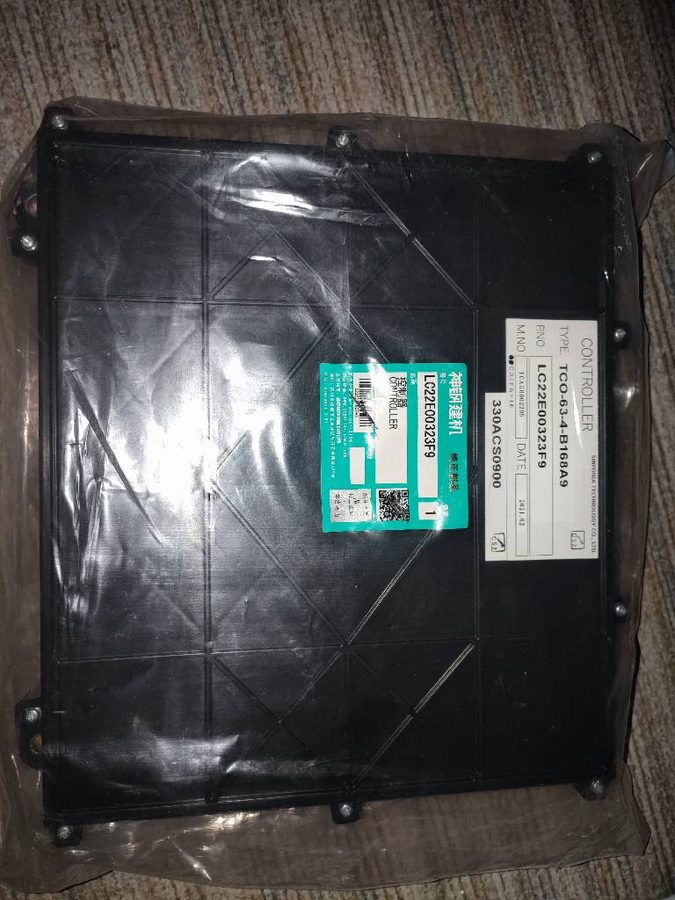
The machine-side electrical parts are different: they are ours. Chassis cable harnesses such as LC13E01186P1 and controller units in the LC22E00336F8 / LC22E00323F8 family are stock lines, quoted with the machine serial, because harness routing changed between builds.
What fails: harnesses before sensors
The failure order on a working machine is cable, connector, sensor. The harness sections that cross the boom and stick pivots flex every cycle, exactly like hydraulic hoses, and they chafe at clamp points long before the conductors break. Connector corrosion follows, especially on machines washed daily. Only then does a sensor itself die, usually from physical impact rather than electronics.
A system that works cold and misbehaves warm, or that loses one axis intermittently, is describing a harness fault, and replacing the sensor will not fix it. The wiring harness and fuse guide covers the connector identification side of this work.
Calibration, drift and the pins nobody suspects
Grade control trusts the machine geometry, so every calibration assumes tight pins and bushings. A boom or stick pin worn beyond limit makes the angle sensors report geometry that is no longer real, and the system drifts in a way no recalibration cures. The correct order is: measure the pins, replace what is worn, then calibrate. The cylinder pin and bushing wear guide gives the measurement routine.
Recalibrate after any pin, bushing or cylinder change, and after any impact on the linkage. Zero errors of a few millimeters per joint add along the linkage into a bucket that is tens of millimeters off grade, which is exactly the size of error that fails an inspection.
Retrofit planning and what to stock
A retrofit decision comes down to control. A display-only 2D system guides the operator and needs sensors, display and power. Full automatic control needs proportional valve integration with the machine's hydraulics and a deeper installation. Budget the electrical installation honestly: power supply, mounting brackets, protected cable routes and connectors cost real money, and cutting them is why so many retrofits fail in their first wet season.
For spares, the arithmetic favors consumables: spare harness sections and connector sets for the moving joints, one angle sensor, fuses. The electronics in the cab rarely fail on site; the cable at the stick does.
What to send us for a quote
Send the machine model and serial, photographs of the system maker's plates on the sensors and display, and the routing of the harness sections you need. We supply from three thousand part types on the shelf with over one hundred thousand part numbers available to order through original supply channels, every line marked genuine, OEM or aftermarket. Machine-side harnesses and controllers sit in the electrical parts range, and quotes start at the contact page. Kobelco publishes machine geometry and electrical data per model at kobelco.co.jp, which is what the system supplier will ask you for first.
Guangzhou Shenyue Machinery Technology Co., Ltd. is an independent supplier of Kobelco parts, not affiliated with Kobelco Construction Machinery Co., Ltd. Genuine parts are supplied through original channels alongside quality OEM and aftermarket alternatives at distributor-level prices.
Frequently Asked Questions
Do I need 2D or 3D grade control for trench work?
2D is usually enough where a reference exists: a laser, a slope sensor or a finished surface. 3D earns its cost on large sites with a design model and no reference, and where crews move across the whole job. Both use the same angle sensors on the linkage; the difference is the reference and the antenna hardware.
Why does my grade control drift even after recalibration?
Because calibration assumes the machine geometry is sound. Worn boom or stick pins change the real linkage dimensions while the sensors still report the old ones, and the error adds along the front. Measure the pins and bushings first, replace what is worn, then calibrate.
Which spare parts should a grade-controlled Kobelco carry?
Harness sections and connectors for the joints that flex, one angle sensor, and fuses. The cab electronics rarely fail on site, while the cable at the stick pivot chafes with every cycle. Guangzhou Shenyue Machinery Technology Co., Ltd. quotes those machine-side electrical lines by serial number.
Can you supply the sensors and displays themselves?
Sensor units, antennas and displays are commonly quoted items matched from the system maker's plates rather than from the excavator model. Send photographs of the plates on the units you have and the machine serial, and each quotation line is marked genuine, OEM or aftermarket.