Pallet forks are the quiet attachment on many Kobelco sites: pipe yards, rental yards, workshops moving crates, recycling depots shifting bales. The machine that dug a trench in the morning loads pallets in the afternoon. But forks are also the attachment where a mismatched hydraulic line shows up fastest, because a pallet drifting down at the wrong moment is not a productivity problem - it is a safety one. Guangzhou Shenyue Machinery Technology Co., Ltd. supplies the valve, hose and cylinder parts behind these circuits, and this post walks the checks before the first lift.
The carriage and the mounting first
Forks mount either pin-on to the standard linkage or through a coupler. Either way, the carriage is the item to inspect before anything hydraulic: cracked tines, worn heel sections, and play between the carriage bar and the tine slots all change how a pallet sits. Tines are wear items with no repair route once the heel thins - forks are lifted by the tine shoulder, and a thinned shoulder bends under a load it used to carry. Match the carriage to the machine's lift capacity from the load chart, not to what the tines appear able to hold.
The mounting hardware belongs in the same inspection. Loose carriage pins and worn bushings let the whole set rock under load, and a rocking carriage loads the hydraulic circuit unevenly - the drift that gets blamed on valves sometimes starts as mechanical slack at the mount.
What the hydraulic line must provide
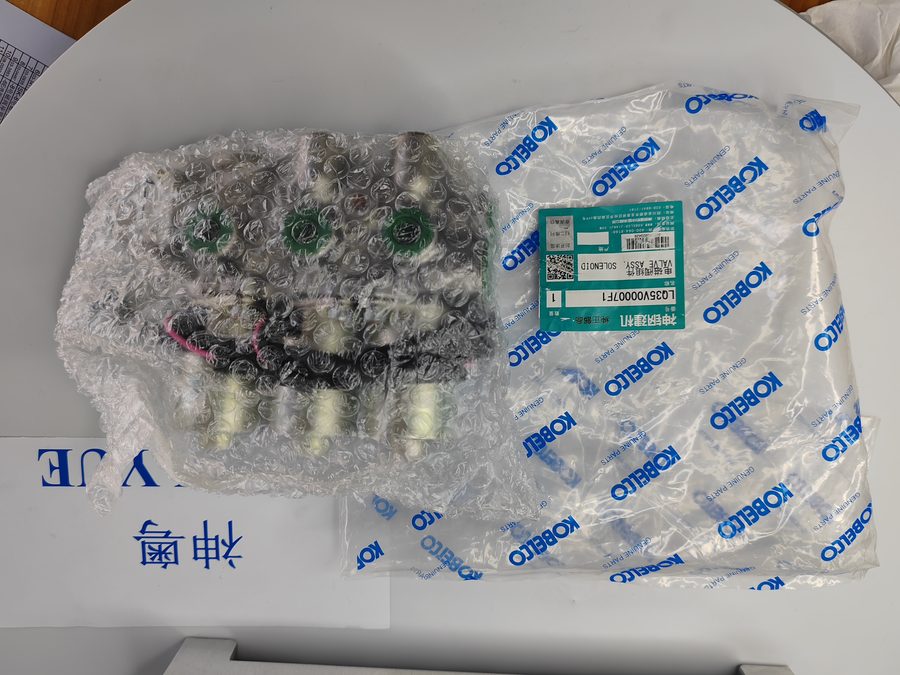
A tilt or clamping circuit on forks needs three things to behave. First, a holding check: gravity acts on the load the moment the pump stops, so the circuit keeps position without pump pressure - that is the holding valve line, and the solenoid valve assemblies in our records such as LQ35V00007F1 and YN35V00047F3 are the kind of attachment-line valves those circuits run through. Second, flow matched to the function - our attachment flow matching guide covers the arithmetic. Third, a relief setting that protects the carriage, because slamming a pallet down is a pressure event like any other impact. The main relief family such as YN22V00001F4 sets the ceiling for the whole circuit, and the attachment relief protects the arms between.
Drift test with the machine cold: lift a rated load, stop the engine, and watch the carriage for five minutes. Slow drift points to the holding valve or the cylinder seals, not to the pump. On forks this test matters more than on any other attachment, because the load is usually above something that can be damaged.
Hoses and cylinders do the daily work
Fork circuits work hard in short bursts all day, and the parts that fail are the ones that flex and seal. Hoses in the attachment line - the YN52V01016R620 line in our records is one example - rub against the carriage frame and go at the clamp points first; our attachment circuit protection guide covers the clamp and guard discipline that applies here as well. Tilt cylinders lose their rod seals from side loading when the operator nudges pallets into place. Both fail gradually, and both announce themselves in the drift test if it is run regularly - which is why the test belongs on the monthly list for any machine wearing forks, not only after a fault appears.
Reading the load chart honestly
Reading the load chart honestly is the last piece, and the circuit layout behind it is in our circuit diagram reading guide if you want the ports and sections. Guangzhou Shenyue Machinery Technology Co., Ltd. supplies Kobelco attachment and valve parts across 30+ countries, quotes every item as genuine, OEM or aftermarket, and holds 3,000+ part types on the shelf with 100,000+ part numbers available to order. Machine ratings and cab charts are published by Kobelco Japan, and that chart - not the tine rating - is the ceiling.
Need the parts this article talks about?
If your forks drift, bang at the relief, or lift unevenly, the circuit - not the tines - is usually the story. Send the machine model and the attachment serial, and the valve, hose and seal parts come back matched to the circuit. Wider cross-brand hydraulic coverage sits on our family site corbayparts.com; for the Kobelco-specific line, Guangzhou Shenyue Machinery Technology Co., Ltd. quotes direct from the records.
Frequently Asked Questions
Why does a pallet on excavator forks drift down with the engine off?
Gravity works on the load the moment the pump stops, and a holding valve or worn tilt cylinder seal is what should resist it. Slow drift points to the holding valve line or the cylinder seals, not to the pump. Solenoid valve assemblies such as LQ35V00007F1 in our records are the kind of parts those circuits run through.
What hydraulic parts matter most for pallet forks on an excavator?
Three: the holding or lock valve that keeps the carriage in position, the attachment relief that protects the circuit from impact, and the hoses that flex at the clamp points. The main relief family such as YN22V00001F4 sets the circuit ceiling. Guangzhou Shenyue Machinery Technology Co., Ltd. quotes each as genuine, OEM or aftermarket.
How often should fork tines be inspected?
At every fitting and monthly in service. Tines fail at the heel, where the fork bends under load, and a thinned heel has no repair route - the tine is replaced. Inspect the carriage bar for cracks and the tine slots for play at the same time, and match the carriage rating to the machine's load chart.
Can any excavator carry a pallet fork set safely?
Only within the load chart. Forks place the load further from the pivot than a bucket, so capacity drops steeply at reach, and the chart figure applies at short radius. Keep the load low, travel slow, and confirm the machine's rating with the dealer or from the cab chart before the first lift.