A buyer looks up his model in the parts book, finds the figure, orders the number under it - and the part arrives wrong, even though nothing was mistyped. The usual reason is a serial break point: the catalog lists two versions of the part, split by build date or serial range, and the model name alone does not say which side the machine sits on. Guangzhou Shenyue Machinery Technology Co., Ltd. ships Kobelco parts worldwide and reads the serial break on every order where one exists. This post explains where the breaks come from and how to land on the right side of one.
Where serial breaks come from
Kobelco builds the same model over years, and along the way the machine changes: a revised pump, a new controller, an updated emissions package, a changed hose route. The catalog handles this with applicability ranges - each figure covers a serial span, and inside one figure the same component can show an early number and a late number. Our catalog index guide covers how the book is organized; the break point is the layer under the figure, and it only resolves with the serial number of the actual machine. That is why our nameplate cross-reference guide starts every identification from the plate.
The engine side is where breaks bite hardest
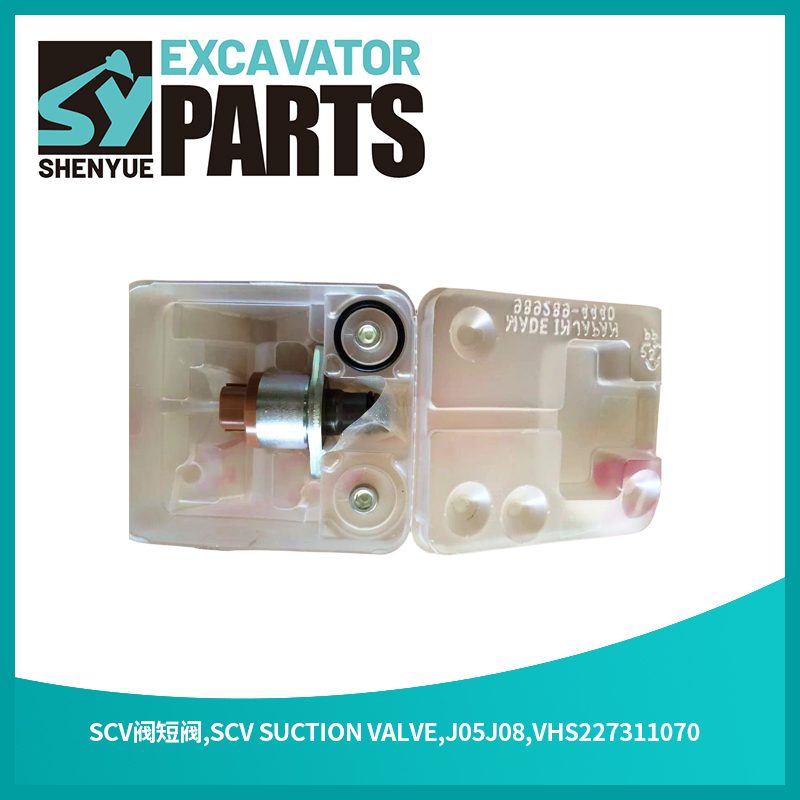
Engine parts are the classic case, because engines were revised mid-run more often than the rest of the machine. The cylinder head gasket for the J05 and J08 engines exists in early and late versions - both live in our line as separate product pages, and ordering the wrong one is a return shipment, not a repair. Fuel-system parts break the same way: the SCV suction valve VHS227311070 in our records covers the J05 and J08 engines, and it is quoted against the engine number because the injection hardware moved between builds. The engine documentation from Hino global is the source side of that story - Kobelco SK machines carried Hino engines across generations, and the engine number, not the excavator model, decides the fuel and head-side parts.
Sensors and electrical parts break by controller generation rather than by engine. The ECU speed sensor family in our records - VA32G9000100, VAMC845235 and the VH89411E0050 line - spans different controller builds, and the same-looking sensor with a different number will not communicate. When a sensor order arrives wrong, the cause is almost always a break point that was read from the model name instead of the plate.
The two-identifier habit: when you send an enquiry, send the machine serial and, for engine-side parts, the engine number. Those two identifiers resolve nearly every break point before the quote is written - and they cost nothing to photograph.
Break points versus supersession
A serial break and a supersession look similar and behave differently. A supersession is one number replacing another over time - the old number is crossed out and the new one fits the same machines, and our supersession guide covers that flow. A serial break is two live numbers, each fitting a different slice of the same model, and both may be in production parts books for years. Confusing the two is how a buyer orders the "latest" number and receives a part that fits the late machines only - not his.
Grey imports widen the gap
Machines built for different markets can carry different equipment under the same model name, and a catalog printed for one market may not list what the other assumes. The grey import identification guide covers that identification in depth; for break points the rule is the same - the plate and the casting, not the badge on the cab. When neither identifier can be read, our part number search accepts the model and what is known, and the remaining gap is closed from the casting number using the casting number guide.
How we apply the breaks for you
Send the serial and the job list, and Guangzhou Shenyue Machinery Technology Co., Ltd. checks each line against the applicability range before quoting, so an early-build SK does not receive late-build parts. The company has done this since 2007, holds 3,000+ part types on the shelf and 100,000+ part numbers available to order, and sells to buyers in 30+ countries. Every quote line states genuine, OEM or aftermarket, and the full catalog is open for browsing. As an independent supplier, not affiliated with and not authorized by Kobelco Construction Machinery Co., Ltd., we quote the grade on the paper and let the records do the talking.
Frequently Asked Questions
Why does the same part appear twice in the Kobelco parts book for one model?
Because the machine changed during its build run. The catalog splits the model into serial ranges, and a component revised mid-run shows an early number and a late number under the same figure. The machine serial, not the model name, decides which number fits, and Guangzhou Shenyue Machinery Technology Co., Ltd. checks every line against the applicability range before quoting.
Which parts are most likely to sit on opposite sides of a serial break?
Engine-side parts first: the J05 and J08 head gasket exists in early and late versions, and the SCV suction valve VHS227311070 is quoted against the engine number because injection hardware moved between builds. Sensors follow the controller generation - the speed sensor family VA32G9000100 and VH89411E0050 spans different controller builds.
Is a serial break the same as a superseded part number?
No. A supersession is one number replacing another across all machines; a serial break keeps two live numbers, each fitting a different slice of the same model. Ordering the newest number blindly can put a late-build part on an early machine. Guangzhou Shenyue Machinery Technology Co., Ltd. states which side of the break each quote applies to.
What information resolves a break point fastest?
Two photographs: the machine nameplate with model and serial, and the engine number plate for engine-side parts. With those two, the applicability range resolves before the quote is issued. Casting numbers on the worn part close the remaining gaps, using the casting number versus part number method on file.