A Kobelco working a steel mill does jobs no quarry machine ever sees: cleaning slag pits, tramming hot spill, loading scale and scrap charge, and housekeeping around caster lines and mill bays. The machine earns well and dies young unless the parts plan matches the environment. Radiant heat, sharp abrasive slag, magnetic debris and enclosed buildings full of dust act on every system at once. Guangzhou Shenyue Machinery Technology Co., Ltd. supplies several mill fleets, and the list below is the one those buyers work from.
The four loads of a mill yard
Heat is the first: a machine parking near a slag pot or working cooling spill takes radiant load on hoses, cables, cylinders and the cab, and the cooling system runs near its limit in buildings where airflow is restricted. Abrasive is the second: slag and mill scale cut undercarriage, bucket lips and radiator cores. The third is magnetic debris: scale, bolts and cuttings that stick to every steel surface and pack into track links and cooler fins. The fourth is shift patterns: three-shift operation means no cool-down window for inspection, so checks have to be scheduled rather than opportunistic.
Cooling: the system that decides everything
Every other problem in a mill yard gets worse when the machine runs hot, so the cooling pack comes first. Blow the cores out daily rather than weekly, because scale dust packs fins in hours. Check the fan for chips from tramp material, the fan belt for glazing, and the thermostat for full lift: an engine that never reaches temperature soots up just as badly as one that overheats. The parts we quote most for this work are the engine fan VA32G4800201, fan belt VA3434904400, thermostat VA3434611500 and oil cooler VA3433903100, each marked genuine, OEM or aftermarket.
Hydraulic oil temperature deserves the same attention: a machine loading hot slag with continuous swing cycles pushes oil temperature up while oil life falls. If the hydraulic tank is too hot to hold a hand on at shift change, treat it as a fault, not as normal mill work.
Hoses that harden in a month
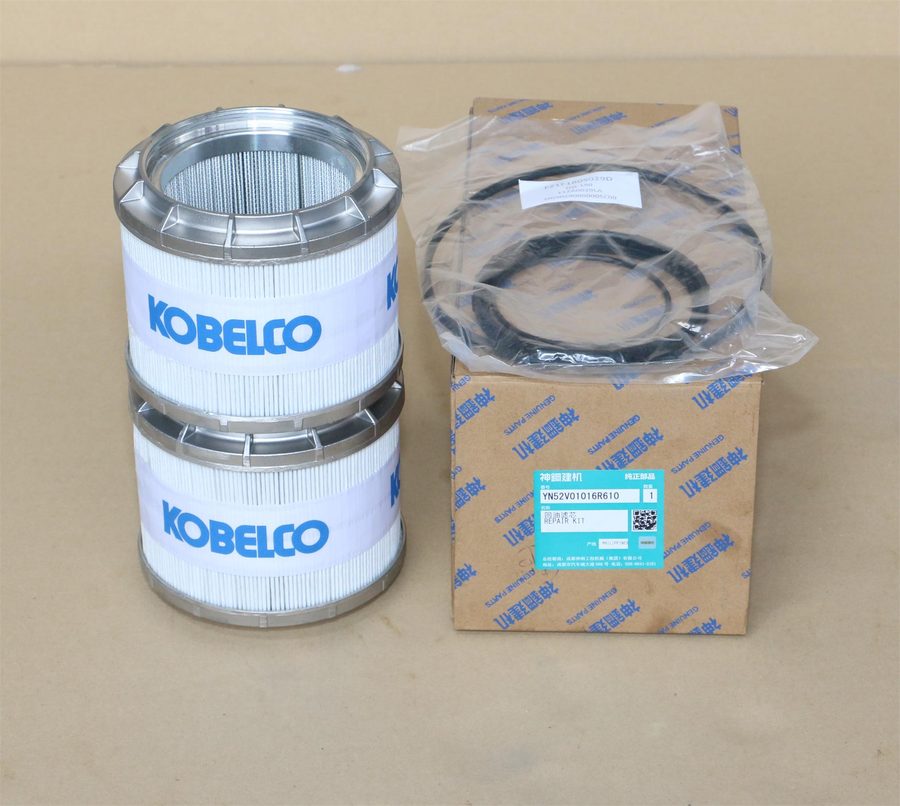
Radiant heat ages hose covers faster than pressure cycles do. A cover that has gone hard and shows fine crazing will crack at the next bend, and in a mill yard the burst lands on hot ground. Mill machines deserve hose replacement on hours and on inspection, not on failure, and routing matters as much as age: any line that can be moved away from a radiant path should be. The families we hold for this work are the YN52V01016R620 / R610 / R100 group, YN52S00023P1 / YN52S00012P1 and YY52V01006P1, quoted with end fittings and measured length.
Undercarriage on hot and sharp ground
Slag works into shoes and links and sets there, and hot spill burns roller seals and shoe grousers long before the chain reaches its wear limit. The routine that pays: clean the undercarriage at the end of every shift while spill is still loose, check tension on the cold-morning figure, and measure rather than guess at every service. An idler shaft such as VA32F2303402 is quoted by its own number read off the part, and rollers are quoted from the casting marking, because the nameplate and the parts book, not the model name, are the authority.
Cab, filters and the small consumables
The cab is the operator's heat shield, and in a mill it is also a dust box: the air filter chokes on scale dust far faster than the interval in a general schedule. Check the element weekly and carry a spare; the YN11P00034R100 filter set is one of the lines we ship most to mill fleets. Keep the hydraulic tank breather clean for the same reason, because a blocked breather in a hot hydraulic system pushes oil past shaft seals.
Air conditioning on these machines is not comfort equipment: a cab that cannot be closed and cooled exposes the operator to the same radiant load as the hoses. Treat weak A/C as a production fault.
What we hold for mill fleets
Cooling parts, hoses, filters and undercarriage lines are ordinary stock for us: three thousand part types on the shelf and over one hundred thousand part numbers available to order through original supply channels, each marked genuine, OEM or aftermarket. The overheating test order guide gives the diagnostic sequence for a hot machine, and the undercarriage part number guide explains how roller, idler and shoe numbers are structured. Filters and cooling consumables sit in the filters and lubricants range, and mill-specific operating limits are published by the manufacturer at kobelco.co.jp. Send the machine serial and your temperature log through the contact page.
Guangzhou Shenyue Machinery Technology Co., Ltd. is an independent supplier of Kobelco parts, not affiliated with Kobelco Construction Machinery Co., Ltd. Genuine parts are supplied through original channels alongside quality OEM and aftermarket alternatives at distributor-level prices.
Frequently Asked Questions
How often should hydraulic hoses be replaced on a slag yard machine?
On inspection and hours, not on failure. Radiant heat hardens covers well before the reinforcement is worn, so a hard cover with fine crazing is due for replacement at the next service regardless of age. Route new lines away from radiant paths wherever the machine layout allows.
Why does a mill machine overheat even with a clean radiator?
Look at airflow and load before the component. Enclosed bays restrict airflow, continuous swing cycles load the hydraulic cooler, and magnetic debris packs cooler fins from the inside of the pack outward. Blow the cores from both sides daily, and treat hot hydraulic oil as a fault in its own right.
What does hot spill do to the undercarriage?
It burns roller seals and shoe grousers, and slag sets inside links where it accelerates wear. Cleaning at the end of the shift while spill is loose, checking tension on the cold figure, and measuring at every service is the routine that keeps the bill manageable.
Can one supplier cover both the cooling and undercarriage sides of a mill fleet?
Yes. Guangzhou Shenyue Machinery Technology Co., Ltd. stocks the cooling parts, hose families, filter sets and undercarriage lines mill machines consume, with over one hundred thousand further part numbers available to order, and every line is marked genuine, OEM or aftermarket.