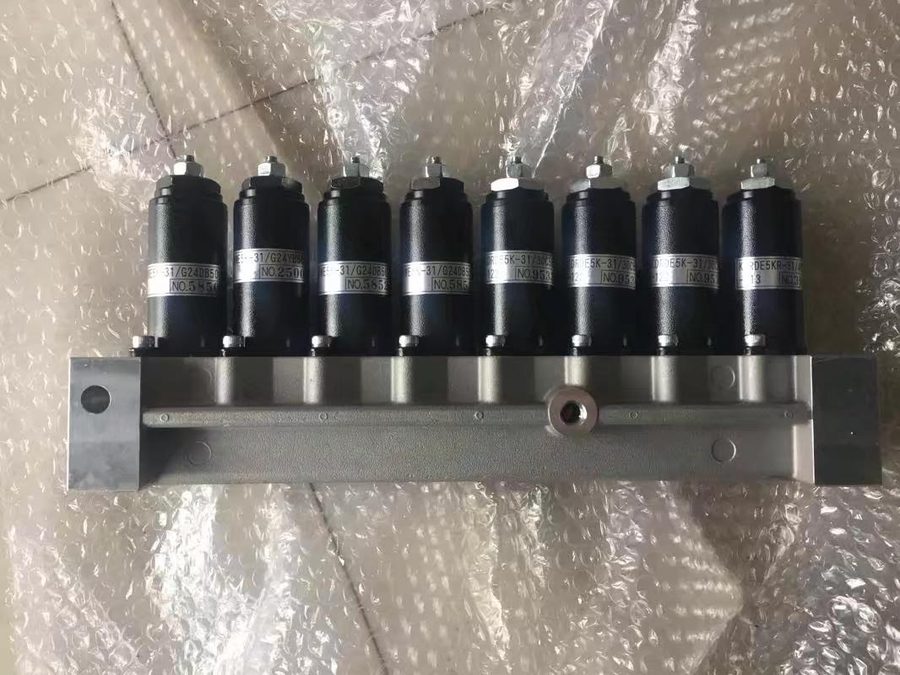
Ride control is one of those Kobelco functions that owners stop noticing until it stops working. The machine travels between faces or up a ramp, the front end stays settled, and the operator arrives without the boom and arm pitching over every bump. When the same machine suddenly rocks like a boat, the cause is often not the ground and not the undercarriage but a function fault in the travel circuit. Guangzhou Shenyue Machinery Technology Co., Ltd. supplies the solenoid and pilot components behind this system, and this guide explains what ride control does, how it fails and what to check before ordering anything.
What ride control does
While the machine travels, ride control damps movement of the front-end cylinders so bumps and gradient changes do not throw the boom and arm up and down. Instead of the cylinders following every ground input freely, the system applies controlled counter-pressure at the cylinder ports for as long as travel is commanded. The moment a working lever moves, the damping is released and full front-end response returns. The result is less pitching, less spilled material and less operator fatigue, which is why a failed function is usually reported as "the machine rides rough" rather than as a fault code on the monitor.
How the function fails
The function is commanded electrically and executed hydraulically, so failures split into two families. Electrical failures are the cheaper ones: a corroded connector, a failed coil or a damaged wire means the command never reaches the valve, and the machine simply behaves as if the function does not exist. Hydraulic failures develop more slowly: a sticking spool, contaminated pilot oil or a worn valve seat lets the damping work weakly or release unevenly, which shows up as pitching that comes and goes. Oil cleanliness matters here, because small pilot valves suffer first; our guide to pilot filter and system cleanliness explains the mechanism.
Diagnosis in the right order
Start electrical, because it costs nothing. Command the function and check that the valve responds; inspect the connector for corrosion and water entry, especially on machines that are washed down regularly. Next, verify pilot supply with gauges at the test ports, because weak pilot pressure starves several functions at once and ride-control complaints often ride along with them; our walkthrough of test ports and pressure testing shows where to connect. Only then condemn the valve or solenoid itself. Jumping straight to a new solenoid valve without these two steps is the most common way to spend money and keep the symptom.
The parts in the circuit
Across the Kobelco range the function is built from the same families of parts: a solenoid valve in or beside the main control valve, pilot lines and filters, and port-side damping at the cylinders. Our stock list carries solenoid valve assemblies such as YN35V00047F3 and LC35V00004F3 listed with LQ35V00007F1, the spare solenoid relief valve YN22V00035F1, and further solenoid variants including 40C50-213 with YN35V00049F1K. Which reference applies to a given machine depends on model, generation and market, and these are commonly quoted items rather than one-size fits all: the nameplate and the parts book for the serial are the authority. Guangzhou Shenyue Machinery Technology Co., Ltd. checks every reference against the serial before quoting.
| What you see | Most likely area | First check |
|---|---|---|
| Function never engages | Electrical command | Connector, coil, harness |
| Damping weak or uneven | Pilot supply or spool | Pilot pressure with gauges |
| Pitching only under load | Port-side damping | Cylinder port valves |
| Rough in all travel | Wider travel fault | Undercarriage, final drives |
Ordering the right part
When ordering, send the machine model, the serial number and the number printed on the part being replaced. Photographs of the connector and the valve block help when a machine has been reworked by a previous owner, which is not rare on older imports. Guangzhou Shenyue Machinery Technology Co., Ltd. marks every item genuine, OEM or aftermarket at quotation and supplies genuine parts through original channels alongside quality alternatives at distributor-level prices. Buyers can check references on our part-number search page or send the enquiry through the contact page. Kobelco's own machine documentation sits at kobelco.co.jp.
Frequently Asked Questions
What does ride control actually do on a Kobelco excavator?
While the machine travels, it applies controlled damping at the boom and arm cylinder ports so the front end does not pitch with every bump, and it releases the moment a working lever moves. Guangzhou Shenyue Machinery Technology Co., Ltd. supplies the solenoid and pilot parts behind the function.
Which solenoid valves does the ride-control circuit use?
References vary by model and generation. Our stock list carries solenoid assemblies YN35V00047F3 and LC35V00004F3 with LQ35V00007F1, plus the spare solenoid relief valve YN22V00035F1. All are commonly quoted items that must be matched against the machine serial.
My machine pitches hard while traveling. Where do I start?
Check the connector and coil first, then verify pilot pressure at the test ports with gauges. Only after both pass should the valve itself be condemned. Most cases we see prove to be electrical or pilot-side rather than the valve.
Are ride-control parts sold as genuine or aftermarket?
Both exist. Guangzhou Shenyue Machinery Technology Co., Ltd. marks every item genuine, OEM or aftermarket at quotation, and supplies genuine parts through original channels alongside quality alternatives at distributor-level prices.