The seat belt on an excavator is the one part in the cab that only has to work once, and it works under the worst conditions the machine will ever see - a tip or a roll. That is why belt replacement has stricter rules than any other cab part, and why the hardware behind it deserves the same respect as the belt itself. The 11-22 seat guide walks the daily belt check; this post covers the replacement side - when the belt must go, what the anchor hardware should look like, and how safety parts are sourced. Guangzhou Shenyue Machinery Technology Co., Ltd. supplies Kobelco cab parts across 30+ countries.
The triggers that force a replacement
Three events end a belt's service life. First, any roll-over or tip event, even a minor one - the retractor locked under real load, and its internal mechanism is designed as a single-event device in that scenario; after a real load it is replaced, not tested back into service. Second, visible damage: cuts, frayed edges, chemical staining from fuel or hydraulic oil, or hardening from sunlight. A belt that has been soaked in oil is a belt whose webbing has been attacked, whatever it looks like. Third, function loss: the retractor that no longer locks with a sharp pull, or the buckle that latches without a positive click. Any one of the three is a replacement, not a watch item - and after any incident, the anchor hardware on the seat assembly itself is checked in the same pass.
What the anchors and the seat frame carry
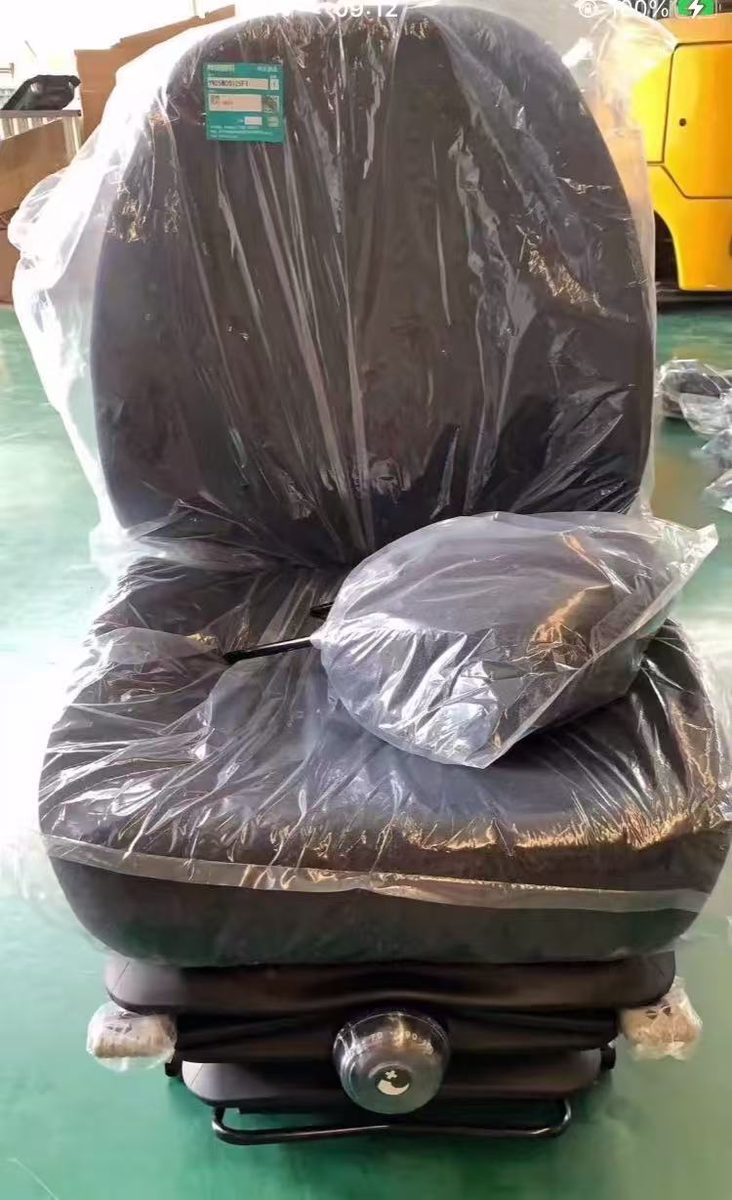
The belt does not anchor to thin air - it anchors to the seat frame rails or the cab structure behind them, and the load path runs through bolts, brackets and the seat mounting itself. That is why seat and belt hardware are inspected together: the operator seat YN25M00163F1 for the SK-10 series in our records, or the YN25M00058F1C seat assembly for the SK200-8, carries the anchor geometry the belt depends on. Corroded or slackened anchor bolts are re-torqued to the marked specification and replaced, never reused once they show stretch or thread damage. The cab structure itself is the machine manufacturer's ROPS design - we do not modify, drill or weld any part of it, and neither should anyone else. The other cab structure part with a replacement rule of its own is the tilt cylinder's safety prop, covered in our cab tilt and safety prop guide.
After-market safety rule: for the belt, the buckle and the retractor, we quote genuine or certified OEM lines and say so plainly on the quote. This is the part of the machine where saving a small amount on an unbranded webbing is the worst trade available, because the test behind the part is invisible - the belt that works in daily use and the belt that locks at 3g look identical on a shelf.
Sourcing and identification
Seat belt assemblies are commonly quoted against the machine serial rather than the excavator model name, because cab and seat layouts changed across generations and the retractor length and anchor spacing vary with them. On our records the belt lines for SK-series machines are quoted with the nameplate as the authority - send the serial and a photo of the anchor plate, and the return quote carries the exact assembly. Guangzhou Shenyue Machinery Technology Co., Ltd. holds 3,000+ part types on the shelf and 100,000+ part numbers available to order, quotes every item with its grade, and has supplied Kobelco parts since 2007.
Make it part of the handover
On multi-operator sites the belt is the first item to degrade quietly, because each operator assumes the last one checked it. Put the belt and anchor check into the handover routine - two minutes, both operators, every changeover, and the webbing glance doubles as a reminder that the belt only has to work once. The walk-around checklist already covers the machine side; the belt takes one more glance at the webbing and one hard pull on the latch. For fleets and rental yards the spare-belt policy is simple: one spare per five machines is usually enough, kept in the store with the consumables rather than in the cab, where sunlight ages it. Guangzhou Shenyue Machinery Technology Co., Ltd. quotes the safety side of the cab - belts, anchors, seats and props - as one list, and the machine-side documentation is published by Kobelco Japan.
Need the parts this article talks about?
Whether the belt failed the pull test, the machine came out of an incident, or the anchors need re-torquing hardware, send the machine serial and the seat type. The belt, the anchor hardware and the seat parts come back as one matched set, with the grade stated and the independent-supplier line below.
Frequently Asked Questions
When must an excavator seat belt be replaced rather than inspected again?
After any roll-over or tip event where the retractor locked under load, when the webbing shows cuts, frays, oil soaking or sun hardening, or when the retractor no longer locks with a sharp pull. Any one of these ends the belt's service life. Guangzhou Shenyue Machinery Technology Co., Ltd. quotes replacement assemblies against the machine serial.
Why are seat belt part numbers quoted by serial number?
Because cab and seat layouts changed across SK generations, and retractor length and anchor spacing vary with them, so a belt that fits one cab build will not reach the anchors on another. The nameplate serial is the authority, and a photo of the anchor plate with the serial confirms the assembly before the quote.
Should a replacement seat belt be genuine?
For the belt, buckle and retractor, yes - genuine or certified OEM. The certification behind a safety webbing is invisible on the shelf, and an unbranded belt that works in daily use may not lock under a real load. Guangzhou Shenyue Machinery Technology Co., Ltd. quotes safety parts with the grade stated plainly on the quote line.
What does the ROPS label on the cab mean for the belt?
The cab structure is the machine manufacturer's roll-over protective design, and the belt is part of that system - the two work together. That is why the structure is never drilled, welded or modified, and why the anchor hardware is inspected with the belt: the load path runs through the seat frame and brackets, such as on the YN25M00163F1 SK-10 series seat.