Workshop chemistry is the cheapest way to fix a loose fastener and the cheapest way to ruin a good one. A medium-strength thread locker on the right bolt survives months of vibration; the same compound on a sensor thread or a pre-coated bolt can turn a five-minute job into a stripped thread. Guangzhou Shenyue Machinery Technology Co., Ltd. supplies fasteners for SK series machines and fields the question weekly, so this guide sets out the working rules our own quoting practice follows.
First, know what arrives on the bolt
Not every fastener leaves the supplier dry. Many engine bolts, head bolts such as VHS111852460 and turbo-area bolts such as VA3433200301, arrive with a dry factory coating, a micro-encapsulated patch or a wax that already provides controlled friction and sometimes locking. Adding wet thread locker over a coating changes the friction the torque figure was calculated for, so the bolt is either under-tensioned or over-tensioned while the wrench reads correctly. The rule is simple: if the bolt arrives coated, use it as delivered; if it arrives dry and the manual calls for a locker, apply one.
Where a thread locker earns its keep
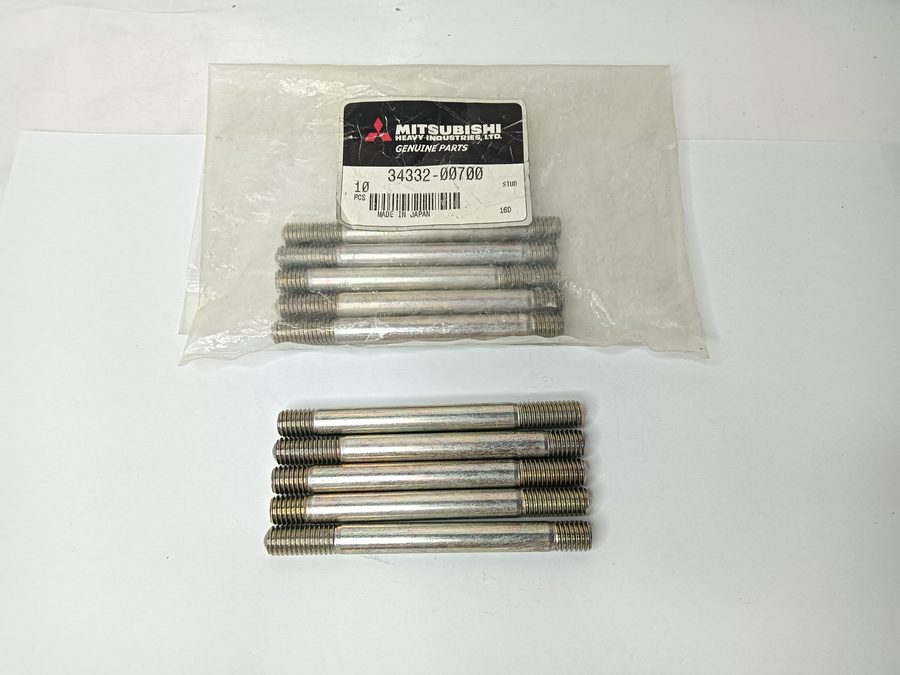
Vibration-prone joints into cast housings are the classic case: cover bolts, flywheel and bellhousing fasteners, studs such as VA3433200700 where a nut could back off, and any fastener whose loss reaches rotating parts. A medium-strength removable compound is the default choice, because the joint will be opened again. High-strength compounds belong only on joints the manual marks permanent, since removing them means heat and a weakened bolt. Keep one small bottle of each in the workshop and the habit stays cheap.
| Joint | What to use | Why |
|---|---|---|
| Pre-coated head or turbo bolt | Nothing added | Coating already sets friction and locking |
| Cover, housing, bracket bolts | Medium-strength thread locker | Vibration joint, opened at service |
| Sensor and gauge threads | Nothing, or the specified sealant only | Many sensors ground through the thread |
| Oil-pressurised pipe joints | The sealing method the joint was built for | Sealant crumbs block pilot and sensor ports |
Where sealant does damage
Two places punish sealant. The first is sensor threads: many pressure and temperature sensors earth through the thread, and an insulating layer of paste quietly falsifies readings, so they are fitted dry or with exactly what the specification names. The second is small oil passages: excess liquid sealant on a fitting squeezes inward on tightening, crumbs break off into the oil, and they end up at the pilot filter or a sensor port. On hydraulic joints, the sealing method the joint was built for, an O-ring, a bonded washer or a machined cone, is the whole answer, and the fastener and torque guide covers how the bolts themselves are specified.
Buying fasteners with the question answered
The practical purchase question is not only the part number but the condition: dry, pre-coated, or supplied with the compound. Ask at quotation, and ask for the torque figure to be confirmed against the serial, because coating and torque interact. Buyers sourcing across brands, including our international range at excavatorpartsglobal.com, should expect the same answer from a competent supplier rather than a shrug.
Guangzhou Shenyue Machinery Technology Co., Ltd. holds three thousand part types on the shelf and over one hundred thousand part numbers available to order through original supply channels, each marked genuine, OEM or aftermarket. Fastener listings can be checked in part number search, and engine-side hardware sits in the engine parts range. General fastening practice for the engines fitted to SK machines is documented by Hino at hino-global.com; for anything specific, send the serial through the contact page.
Guangzhou Shenyue Machinery Technology Co., Ltd. is an independent supplier of Kobelco parts, not affiliated with Kobelco Construction Machinery Co., Ltd. Genuine parts are supplied through original channels alongside quality OEM and aftermarket alternatives at distributor-level prices.
Frequently Asked Questions
Should I put thread locker on a new Kobelco head bolt?
Not if it arrives pre-coated. Bolts such as VHS111852460 are supplied with a factory coating that already sets the friction the torque figure assumes, so adding a wet locker over-tensions or under-tensions the bolt. Guangzhou Shenyue Machinery Technology Co., Ltd. states at quotation whether a fastener is dry or coated.
Which thread locker strength should a workshop keep?
A medium-strength removable compound covers cover bolts, brackets and studs such as VA3433200700, where the joint will be opened again. High-strength compounds are only for joints the service manual marks permanent, because removal needs heat.
Can sealant be used on pressure sensor threads?
Only the sealant the specification names, if any. Many sensors earth through the thread, so ordinary paste insulates it and falsifies readings. Fit dry unless the specification says otherwise.
Why do fitting sealants cause hydraulic problems?
Excess liquid sealant squeezes inward on tightening and sheds crumbs into the oil, which travel to the pilot filter or a sensor port. Hydraulic joints are sealed by the O-ring, bonded washer or cone they were built with, not by paste on the thread.