On almost every Kobelco crawler excavator the track chain is the largest single wear item, and the one most often run past its limit. A chain at twenty percent wear still digs normally, so nothing forces the owner to look at it. A chain at sixty percent has already destroyed the sprocket it runs on, is grinding the idlers out of round and has started cracking links. What would have been one invoice becomes four. Guangzhou Shenyue Machinery Technology Co., Ltd. quotes undercarriage parts every working day, and the same question comes up in most of those enquiries: how do I know where my chain actually is?
What is inside a link assembly
A track chain is a loop of link assemblies. Each is a pair of links joined by a pin and a bushing, sealed at both ends so the grease stays in and the grit stays out. The bushing outer surface is what the sprocket tooth drives against; the pin-to-bushing fit carries the load. When that fit wears, the chain does not stretch like a rubber belt. Pin centers simply sit further apart, and that distance is what chain wear actually means, which is why it is measured rather than eyeballed.
One joint is the master link, closed by a master pin retained by a plug, a bolt or a snap ring. Sealed chains hold lubricant in each joint for life; dry chains have no seals and rely on external lubrication, which is also why they can be turned.
Measure pitch, not appearance
Lay the chain out straight on flat ground, or measure on a clean stretch of track with the machine parked. Measure the distance across four or five pin centers, front face to front face, and compare that number with the specification for your chain. A chain that measures over the limit is worn, no matter how good the bushings look. Repeat the measurement in three places, because a chain wears unevenly and one bad section is enough to make the whole loop pulse.
Then look at the parts that touch the chain. Sprocket teeth that have hooked or sharpened, idler rims worn into a groove, roller flanges worn thin, and shoes with worn or missing grousers all tell you the chain has been running out of spec for a while. Record the numbers and photograph them.
| What you see | What it means | What to do |
|---|---|---|
| Pitch at or beyond the wear limit, bushings still round | Normal internal wear | Plan replacement, do not add new rollers to this chain |
| Bushings flattened or cracked, links shiny | Sprocket mismatch or run dry | Replace chain and inspect sprocket teeth in the same job |
| One section measuring long, others short | Seized joint or collapsed bushing | Find the seized pin; a rebuilt section may buy time |
| Cracks at the link boss or around the pin hole | Fatigue, end of life | Stop running the chain, replace the loop |
Turn, reseal or replace
On a dry chain with low internal wear, pins and bushings can be pressed out and turned ninety degrees, putting a fresh surface against the sprocket. It buys a season rather than a life, and only makes sense while links are sound. A sealed chain is rebuilt instead: new pins, bushings and seals pressed into the original links. Both routes undercut a new loop and both are wasted on a chain with cracked links.
Never fit a new chain to a hooked sprocket
New links on worn sprocket teeth wear at several times the normal rate, because the tooth scrapes the bushing instead of rolling into it. The reverse is equally true. If either side is at its limit, do both, and judge idlers and rollers against the new chain rather than against what is on the machine now.
Quote the loop and the running gear together. Guangzhou Shenyue Machinery Technology Co., Ltd. holds 3,000+ part types on the shelf and 100,000+ part numbers available to order through original Kobelco, Hino and KPM channels, so a chain enquiry and a roller enquiry are answered in one message. Send the link count, shoe width and the stamped number, and we confirm fitment before shipping.
The numbers to put on the order
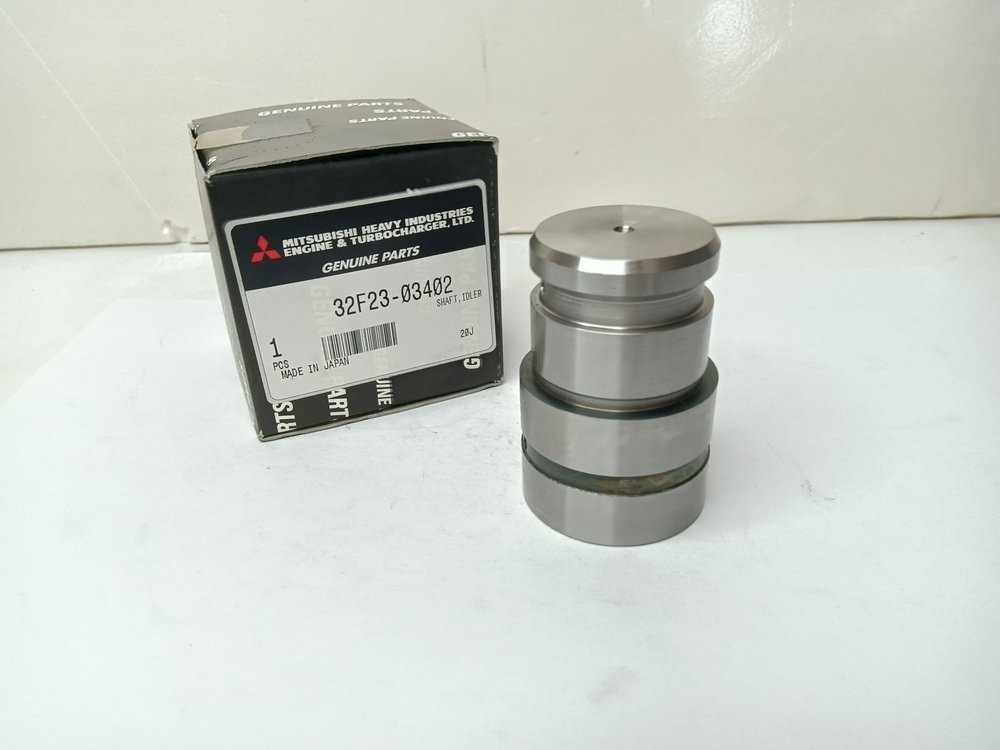
A chain order needs four things beyond the model: link count, shoe width and bolt size, master pin type, and whether the chain is sealed or dry. Quote undercarriage numbers exactly as stamped, because they are long and easy to mistype. Our records use 24100N7035F3J1B and 24100N7035F3CN for the SK330-8 track roller, and an idler shaft is held under VA32F2303402. Where the plate is unreadable, the part is identified by measurement rather than by guesswork.
What we check before shipping
Chains are heavy freight, so a wrong link count is expensive at both ends. Guangzhou Shenyue Machinery Technology Co., Ltd. photographs the stamped number and the master pin area on every chain before packing. For fitment questions start from the undercarriage and rollers guide, browse the undercarriage and cylinder parts page, and send plate photos through the contact page if the model code is unclear. Kobelco's published undercarriage information at kobelco.co.jp is a useful cross-check for link counts by shoe width.
Frequently Asked Questions
How do I measure Kobelco track chain wear without a gauge?
Measure the distance across four or five pin centers on a straight, clean run and compare it with the chain specification. Repeat in three places, because chains wear unevenly. Any measurement beyond the limit means the chain is worn, even if the bushings look smooth.
Should I replace the sprocket when I fit a new track chain?
If the teeth are hooked, sharpened or noticeably thinner, yes. A new chain on worn teeth scrapes instead of rolling, and wears far faster than its rating. The reverse is equally true. Judge sprocket, idlers and rollers against the new chain, not against the parts now on the machine.
Can pins and bushings be turned instead of buying a new chain?
On a dry chain with sound links and low internal wear, turning pins and bushings ninety degrees exposes a fresh wear surface and is a legitimate workshop repair. Sealed chains are normally rebuilt with new pins, bushings and seals instead. Neither route is worth doing once links are cracked.
What information is needed to quote a Kobelco track chain?
Model and serial, link count, shoe width and bolt size, master pin type, and whether the chain is sealed or dry. A photograph of the stamped number helps. Guangzhou Shenyue Machinery Technology Co., Ltd. quotes numbers such as 24100N7035F3J1B exactly as stamped, because one wrong digit ships the wrong loop.