Oil analysis has a reputation problem among machine owners, and it is deserved. A lab report arrives with thirty numbers, four of them flagged, no explanation, and the owner concludes that oil analysis is a ritual rather than a tool. The reports that do work share one feature: the sample was taken the same way, from the same point, at the same interval, every time. A perfect analysis of a badly taken sample is worth nothing, while a modest analysis of a consistent sample shows a trend, and a trend is what predicts failure. Guangzhou Shenyue Machinery Technology Co., Ltd. supplies the filters and the components that oil analysis is meant to protect, and the reports that reach us are usually the ones where sampling method was the only thing wrong.
Five sampling points on a crawler excavator
Engine oil, hydraulic oil, each final drive, the swing gearbox and the coolant. Hydraulic oil sees pump and motor wear plus any dust that entered through a breather. Final drives are gearboxes running in a small oil volume, so a small amount of wear metal shows up as a large concentration, which makes them the most sensitive point on the machine. The swing gearbox is similar.
The procedure decides the result
Take the sample with the oil at working temperature and the machine running or immediately after shutdown, so the wear particles are still suspended rather than settled in the sump. Use a clean vacuum pump and a new tube for each sample, and put the tube into the middle of the oil volume, not at the bottom where sludge sits and not at the top where the oil is cleanest. Discard the first portion so the tube is flushed. Fill the bottle to the marked line, cap it immediately, and write machine, compartment, hours and date on the label. Then send it that day.
The most common mistakes are taking oil from the drain plug, taking it cold, reusing a tube, and sampling at random hours. Each of those produces a number that cannot be compared with the next one, which is the same as having no programme.
| Element or test | What it indicates | Where to look next |
|---|---|---|
| Silicon (Si) | Airborne dust entering the oil | Air intake, breather, filler cap, damaged boot |
| Iron (Fe) | Gears, bearings, cylinder bores, pins | Compare against previous samples for the same unit |
| Copper (Cu), tin (Sn) | Bushings, cooler cores, some bearing cages | Check cooler and pump valve plates |
| Lead (Pb), aluminium (Al) | Bearing overlays, piston and housing surfaces | Case drain flow test, pressure test |
| Chromium (Cr) | Piston rings, rod chrome | Compression test, rod inspection |
| Sodium (Na), potassium (K) | Coolant or salt water ingress | Cooler leak test, head gasket, site conditions |
| Water, viscosity, TAN | Condensation, wrong oil, oxidation | Oil change, breather, storage practice |
| ISO 4406 particle count | How clean the oil is right now | Filtration, breather, filter change interval |
One high reading is not a failure
A single elevated iron number on a machine with 6,000 hours may be a hard week, a new component bedding in, or a sampling error. What matters is the direction across three or four samples, corrected for oil added between them. A rising iron trend with a stable silicon trend is wear. A rising iron and rising silicon together is dust ingress causing wear, and the fix is upstream of the oil.
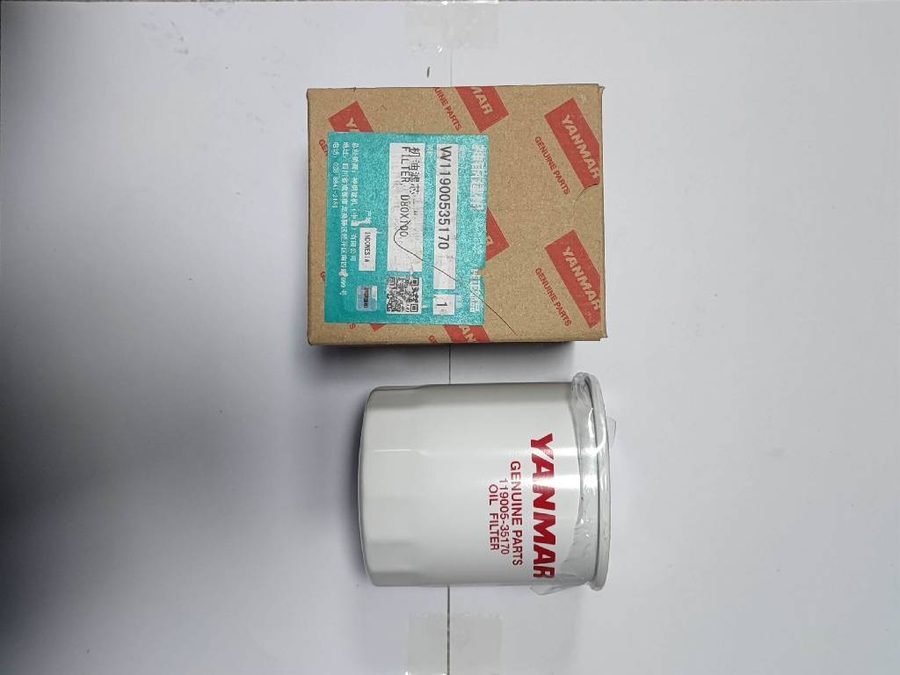
Particle count deserves separate attention because it is the one number that responds immediately. If the ISO code climbs while wear metals stay flat, the oil is being contaminated faster than the filter can clean it, and the breather or a seal is the likely cause. Our records quote hydraulic return filter LS52V01006R210 or LS52V01006R200, engine oil filter LC11P00019R100 and oil filter VV11900535190 or VV11900535170, all confirmed against the serial.
A sample without a filter reading is half a diagnosis. Guangzhou Shenyue Machinery Technology Co., Ltd. holds 3,000+ part types on the shelf and 100,000+ part numbers available to order. When a report flags wear, we ask for the number of hours on the filter and what the pleats looked like. Metal that is too large for the oil sample sits in the filter, and it is often the clearest evidence of which component is failing.
Intervals that make sense
Engine oil at every second oil change, hydraulic oil every 500 hours on a working machine, final drives at every oil change because the volume is small. Add a sample whenever a component is repaired, so the first sample after a rebuild becomes the new baseline.
Where it fits in the maintenance plan
Oil analysis does not replace pressure testing or filter inspection; it tells you which test to run next. Read it beside the filter debris guide and the final drive oil and wear metal guide, and buy elements from the filters and lubricants page. Contamination control standards for hydraulic systems are published by SKF, and Kobelco service intervals by model are at kobelco.co.jp. Send your machine list through the contact page and we will map sampling points to the compartments on your model.
Frequently Asked Questions
Where should I take an oil sample on a Kobelco excavator?
From the middle of the oil volume, with the oil warm and the machine recently running, using a new tube and a clean vacuum pump. Take it from the same point every time. Never sample from the drain plug or with cold oil, because settled particles and cold oil give numbers that cannot be compared.
How often should I sample hydraulic oil?
Every 500 hours on a machine working steadily, and always after a pump or motor repair so the first sample becomes a new baseline. Engine oil can be sampled at every second oil change, and final drives at every oil change because the oil volume is small.
What does high silicon in an oil sample mean?
Silicon usually means airborne dust is reaching the oil, through the air intake, the tank breather, the filler cap or a torn boot. Fix the entry point before changing oil, otherwise the new oil is contaminated the same way. Guangzhou Shenyue Machinery Technology Co., Ltd. quotes breather filters and air elements for that job.
Is one high iron reading a reason to stop the machine?
Not by itself. Compare with the previous samples, correct for oil added, and check the filter debris and a pressure or case drain test. A single elevated number can come from a hard week or a recent repair. A rising trend across three samples is what justifies opening a component.