Excavator fires start small: a weeping fuel line onto a hot exhaust manifold, a chafed hydraulic hose over a turbo, debris packed against the engine until it smolders. They become total losses within minutes, because everything that burns sits in one bay. Prevention is the first half of the answer and we have written it separately. The second half is a fire suppression system, fitted at the factory or retrofitted, and it only works if it is serviced. Guangzhou Shenyue Machinery Technology Co., Ltd. supplies the parts consumed by both halves, and this is the service-side checklist.
What a typical system contains
A machine system has five parts. One or more cylinders holding the agent under pressure, usually dry chemical or a liquid agent, mounted where a discharge reaches the engine bay. A distribution network of hose or pipe ending in nozzles aimed at the fire zones: the fuel pump and injectors, the turbo and manifold, the hydraulic pump area. A detection circuit, most often a linear heat cable run along the fire zones that actuates the system at a set temperature. An actuation circuit with a manual button in the cab. And a gauge on each cylinder, which is the part you can actually check.
The suppression hardware itself is made by specialist system makers rather than by Kobelco, so cylinders, nozzles, detection cable and agent refills are commonly quoted items, matched from the system plate. The nameplate and the system maker's service schedule are the authority, not the excavator model.
The monthly check that takes five minutes
Read the gauge. A cylinder that has lost pressure cannot discharge, and slow pressure loss through a valve or seal is the most common fault found. Check the tamper seal and the manual actuator cable. Then look at the nozzles, because this is where serviceability dies quietly: every other repair in that bay moves insulation, reroutes hoses and adds brackets, and a nozzle that now points at a heat shield instead of the fuel pump protects nothing. Nozzle alignment is a task, not a condition.
Run the same check after any engine bay work, and after any machine has been washed with a pressure washer aimed upward into the bays.
After a discharge: the parts bill
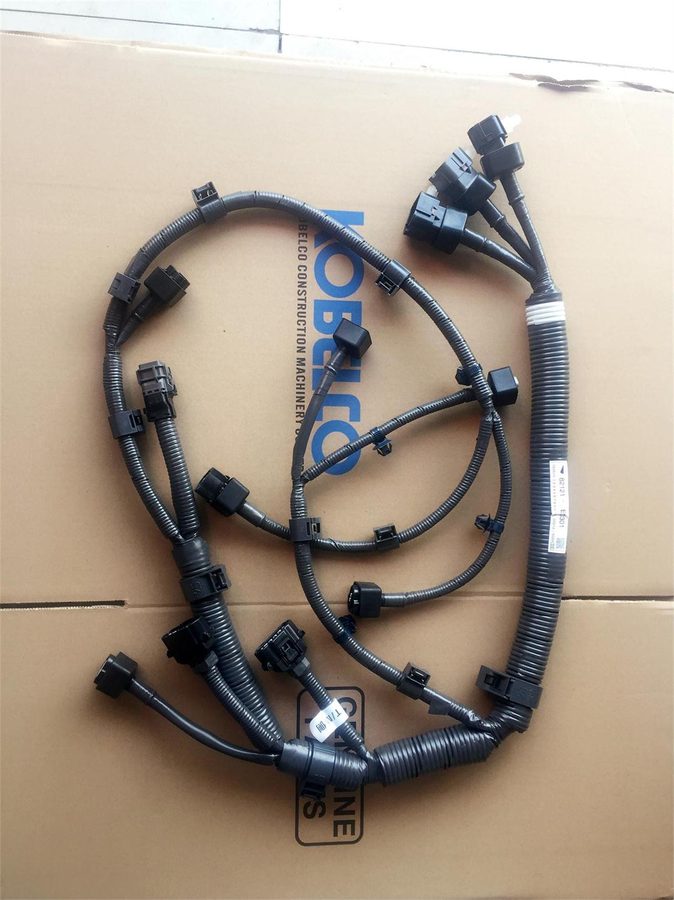
A discharged system is only the beginning. Heat and agent do separate damage: the agent is corrosive until cleaned off, and the heat cooks everything with insulation in the bay. The biggest single line is usually the engine harness, such as VH82121E0301, because a harness that survived a fire has degraded insulation along its whole run even where it looks sound. The injector sub-harness, battery cables, fuel hoses and any hose section that ran near the fire zone belong on the same list.
Clean before you replace, and investigate before you restart. A machine that has had one fire and kept its original cause will have its second within weeks, and the second fire meets an empty cylinder. Find the leak or the chafe point, fix it, then rebuild.
Replace the suppression cylinders as a matched set with fresh agent rather than refilling one, and re-aim every nozzle while the bay is still empty. The daily walk-around checklist is where the gauge reading belongs, one look per shift, and the engine bay fire risk guide covers the prevention side: hoses, heat shields and the housekeeping that stops fires starting.
Sourcing the parts
We hold the engine-side consumables a fire consumes: three thousand part types on the shelf and over one hundred thousand part numbers available to order through original supply channels, each marked genuine, OEM or aftermarket. Harnesses, hoses, fuel line and relays sit alongside the engine parts in the engine parts range, and quotes start at the contact page with the machine serial and photographs of what survived. Kobelco publishes engine bay layout and hose routing per model at kobelco.co.jp, which is what your insurer will ask for too.
Guangzhou Shenyue Machinery Technology Co., Ltd. is an independent supplier of Kobelco parts, not affiliated with Kobelco Construction Machinery Co., Ltd. Genuine parts are supplied through original channels alongside quality OEM and aftermarket alternatives at distributor-level prices.
Frequently Asked Questions
How often should a fire suppression system on an excavator be serviced?
Read the gauge every shift and inspect nozzles and detection cable monthly, but the full service interval, agent weight check and any cylinder replacement period belong to the system maker's schedule, because the hardware is theirs, not the excavator maker's. The system plate is the authority.
Why would a suppression system fail to put out a fire?
The three usual causes are a cylinder that has quietly lost pressure, a nozzle that no longer aims at the fire zone because later repairs moved components around it, and a detection cable that failed open without anyone testing continuity. All three are found by inspection, not by luck.
What has to be replaced after an engine bay fire, even if it looks fine?
Every harness section and cable with insulation that took heat, because degradation runs along the whole length: the engine harness and injector sub-harness, battery cables, fuel hoses and any hose near the fire zone. Clean the agent off everything else before corrosion sets in.
Do you supply the suppression cylinders and detection cable?
Suppression hardware is commonly quoted from the system maker's plate, because those parts belong to the fire system rather than to Kobelco. Guangzhou Shenyue Machinery Technology Co., Ltd. supplies the engine-side parts the fire consumed, each line marked genuine, OEM or aftermarket.