Every fleet eventually has the conversation: this machine used to run all day on a tank and now it does not. The honest answer is that a fuel increase of ten percent or more is a fault, not a fact of age, and it can usually be traced. The work is in measuring it properly and then working through the causes in order, from cheapest to most expensive. Guangzhou Shenyue Machinery Technology Co., Ltd. supplies the parts at the end of that chain, which is exactly why the chain should be followed first.
Measure before you diagnose
Litres per hour on its own tells you nothing, because a machine doing more work burns more fuel legitimately. Fill the tank to the same point each time, record hours, and divide by the production you actually achieved — tonnes moved, cubic metres shifted, trucks loaded. Compare against the same machine on the same job two months earlier, not against a brochure figure. Then check three quick things before touching anything: is the machine running in the same power mode, is auto-idle working, and has the job changed. A machine left idling between trucks can look like a fuel fault when it is a site logistics problem. Guangzhou Shenyue Machinery Technology Co., Ltd. sees this most often on fleets that never log fuel against work done.
Intake and boost come first
A restricted air filter or a leaking charge-air circuit costs fuel because the engine compensates by delivering more of it. Check the filter restriction indicator rather than the calendar, inspect the intake piping for a soft hose that collapses under load, and check clamps and the intercooler for oily tracks that mark a boost leak. Low boost with normal fuel delivery gives black smoke and high exhaust temperature; both are visible before they are measured. The intake servicing guide covers the sequence; the point here is that this is the cheapest check on the list and it is skipped most often.
Injection: the quiet ten percent
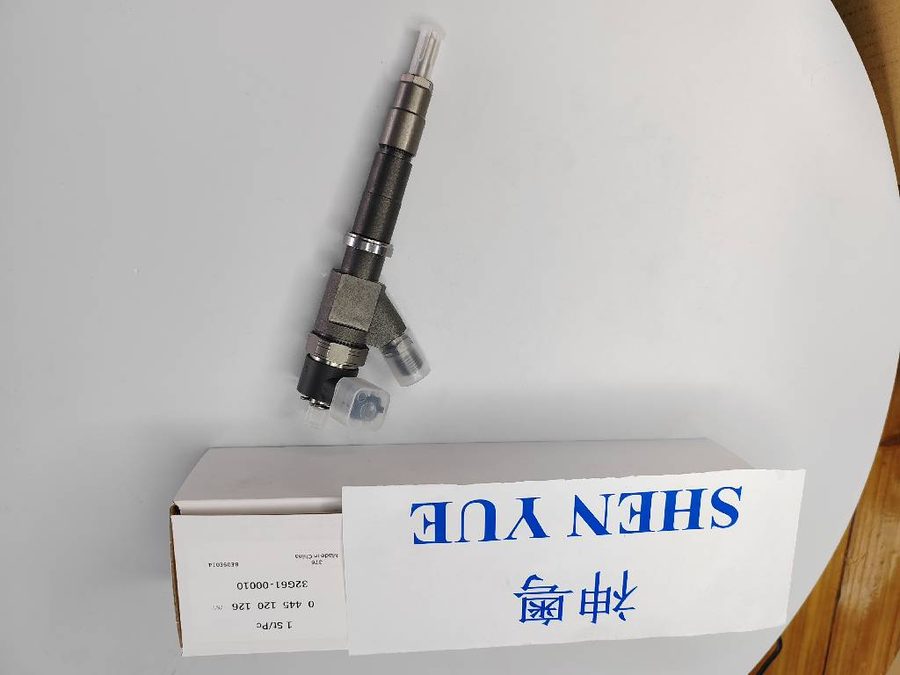
Worn nozzles and a tired control valve do not usually stop the engine. They change the spray pattern, over-fuel slightly and drop efficiency, and the operator notices nothing except the fuel bill and a faint haze under load. Nozzle numbers in our records include VH23670E0050, VH23670E0850 as an assembly, and VA32G6100020 with 0445120126 and VA32G6100010 quoted alongside it, with VHS111761190 as the nozzle seat and 0928400742 / VA32G6107020 as the SCV valve. Pulling injectors for a bench test is a day of work and it answers the question definitively; guessing at them is how a fuel fault becomes an expensive parts swap.
Hydraulics: where the fuel actually goes
| Check | How it shows as fuel burn | Confirm by |
|---|---|---|
| Standby and negative-control pressure | Pump stays loaded when the operator is not asking for flow | Pressure test at idle with the lever neutral |
| Main relief passing | Oil short-circuits to tank and the engine works for nothing | Relief test; hot oil, unusual noise at full stall |
| Pump regulator drift | Flow stays high at low demand, and cycle times feel fast but loose | Regulator and cut-off pressure comparison |
| Wrong oil viscosity | Thicker oil, higher internal losses, more heat | Oil grade against the ambient range on site |
The standby pressure test is the single most useful hydraulic measurement for a fuel complaint, because a machine that never fully unloads burns fuel standing still.
Undercarriage and drag
Track tension set too tight, a seized roller, a dry pin or a bent shoe plate all convert engine output into heat instead of travel. This shows up as fuel burn on machines that spend their day tramming, and it is the most common cause on sites with long haul distances. Walk the undercarriage hot after a shift: an idler or roller that is hotter than its neighbours is working too hard, and a chain that has been over-tensioned shows polish on the bushings.
Log it or lose it. A fuel log with date, hours, litres, site and work type turns a suspicion into a trend line in a month. Guangzhou Shenyue Machinery Technology Co., Ltd. quotes filters, injectors and hydraulic components separately as genuine, OEM and aftermarket so a fleet can see what the efficiency fix costs before approving it — the filter range is the usual starting point.
The order that saves money
Air, then fuel delivery, then hydraulics, then undercarriage, then operator technique. Doing it in that order means the expensive item is only reached when everything cheap has been excluded. Kobelco's published machine data at kobelco.co.jp gives the reference figures for each model, and they are worth having in hand before a claim is made about a machine being thirsty.
Frequently Asked Questions
How much fuel should a Kobelco SK200 use per hour?
Published figures vary with mode, attachment and duty cycle, so treat any single number as a reference rather than a target. What matters is the trend on your own machine against its own history on comparable work. A rise of ten percent or more on the same job justifies the intake, injection and hydraulic checks in that order.
Can a dirty air filter really increase fuel consumption?
Yes. A restricted intake reduces the air the engine can draw, and the fuel delivered for that airflow no longer converts efficiently into work. Check the restriction indicator rather than the service calendar, and inspect intake hoses for soft sections that collapse under load.
Do worn injectors always cause smoke or hard starting?
No. Moderate nozzle wear often shows only as higher fuel burn, a faint haze under load and slightly softer response. That is why a bench test answers the question and a road test does not. Our records quote VH23670E0050, VH23670E0850 and VA32G6100020 as injector numbers for these engines.
What hydraulic fault wastes the most fuel?
A pump that never fully unloads. If standby or negative-control pressure is wrong, the machine burns fuel standing still with the levers neutral. It is a fifteen-minute pressure test and it is routinely skipped. Guangzhou Shenyue Machinery Technology Co., Ltd. supplies the regulator and relief parts once the test identifies the cause.