When a typhoon passes, a river overtops a levee or a hillside lets go, excavators arrive before the news crews leave. Kobelco machines are regulars on emergency duty because they are compact, precise and quick to redeploy, but disaster work is unlike any planned job: water, silt, tangled debris and twenty-hour shifts arrive together, and the parts plan has to anticipate all of them. Guangzhou Shenyue Machinery Technology Co., Ltd. supports contractors who take this duty on, and this guide sets out what actually fails first and how to prepare the parts list before the call comes.
Water is the first enemy
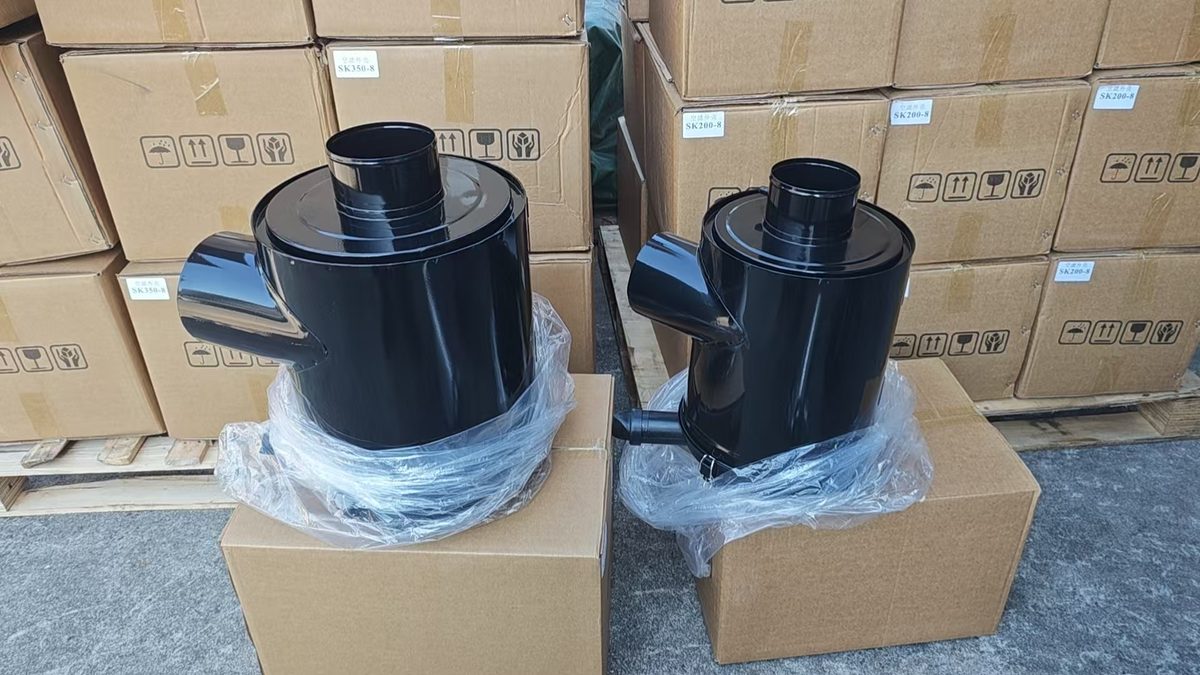
Every flood job involves crossings and submerged or splashed components. The intake is the immediate worry: water ingested through a low or damaged intake kills engines in seconds, so check the snorkel, clamps and cleaner housing before the first shift. After any deep crossing, inspect the air cleaner element — a wet or silt-loaded element must be replaced, not dried and reused. Our intake servicing guide covers the element and housing checks that matter here, and complete cleaner assemblies for 20-ton and 30-ton machines are on the shelf.
Silt and mud: the grinding package
Silt and mud: the grinding package. Floodwater carries fine silt that behaves like lapping compound. It packs the undercarriage, finds its way past worn seals and accelerates pin and bushing wear everywhere it reaches. Machines on debris duty should be washed down at every shift change, with attention to the track frames and around the cylinders, because packed mud also hides leaks and loose hardware until they become failures. Grease intervals double on this duty — the grease itself is cheaper than every pin it protects, and pins that ran dry through a flood season show the damage for years afterwards.
Electrical: connectors and chafe points
Electrical: connectors and chafe points come next. Debris drags through the working envelope and finds harnesses. After each shift, look for chafed sections, unplugged connectors and moisture in obvious places — sensor plugs near the engine and under the cab are the usual victims. Drying and re-seating a connector on shift beats chasing an intermittent fault a week later, and a can of contact cleaner in the service box earns its keep on the first night shift. Machines that stall without warning on debris duty usually show electrical or fuel-supply causes, both covered in our sudden stoppage diagnosis.
Filters before everything else
The single most valuable parts box on a disaster job is a filter box: engine oil and fuel filters, hydraulic return and pilot filters, air elements, one per system per machine. Silt-laden air and contaminated fuel burn through filtration faster than any planned site, and changing filters on schedule through the emergency is cheaper than every component downstream of them. Our records cover these filter families for the SK range, and the seasonal discipline behind them is described in our rainy season protection guide.
Sourcing under time pressure
Emergency work compresses procurement into days. The practical answer is to buy from verified records, not from urgency: a wrong urgent part helps nobody. Guangzhou Shenyue Machinery Technology Co., Ltd. keeps more than 3,000 part types on the shelf and over 100,000 part numbers available to order, quotes every line genuine, OEM or aftermarket, and supports single-piece shipments for the small but critical items — sensors, filters, seal kits — that decide whether a machine finishes the relief shift. The fastest enquiry states the machine serial and the failed part number in one message.
Plan the parts before the season
Contractors in typhoon and monsoon belts who stage a filter and consumable box per machine before the season start report fewer days lost when the call comes. The machines themselves are ready — Kobelco's own emergency and recovery positioning is described at kobelco.co.jp — what decides the outcome is the filtration, the grease and the seals staged around them. A machine that survives the flood and keeps digging is worth several times a machine that joins the debris it was clearing.
Frequently Asked Questions
What should I check on a Kobelco excavator after wading through flood water?
Inspect in order: the intake and air cleaner for water or silt, engine and hydraulic oil for milkiness, electrical connectors near the engine, the track frames for packed silt, then grease every pin. Replace any wet air element rather than drying and reusing it.
Which parts should an emergency response kit contain for an excavator?
One set of engine oil, fuel, hydraulic return and pilot filters plus air elements, along with grease, seal kits and common sensors. Guangzhou Shenyue Machinery Technology Co., Ltd. assembles this list per machine from records covering over 100,000 orderable part numbers.
Why do excavators wear faster on flood and debris duty?
Flood silt acts as an abrasive on pins, bushings and seals, debris chafes harnesses and hoses, and contaminated air and fuel load the filters far faster than planned sites. Double grease intervals and wash down at every shift change.
Can emergency parts be shipped quickly from China?
Yes. Guangzhou Shenyue Machinery Technology Co., Ltd. supports single-piece and small urgent shipments, quotes parts graded genuine, OEM or aftermarket, and confirms every number against the machine serial before dispatch so urgency never becomes a wrong part.