Of everything on the front end, the quick coupler is the one attachment whose failure mode is measured in consequences rather than downtime. A coupler that will not lock, or that releases a bucket under load, is a safety event before it is a repair ticket - which is why the diagnosis order for a coupler differs from the order for any other hydraulic problem. Guangzhou Shenyue Machinery Technology Co., Ltd. supplies the pin, valve, hose and cylinder parts behind coupler circuits, and this post walks the checks in the order they should be run.
Stop work first, then diagnose
The moment a coupler behaves differently - a lock that needs a second attempt, a bucket that rocks where it used to sit solid, a warning that will not clear - the attachment is changed at ground level with the safety pin fitted, and no one works under a raised coupler from that point on. Then the diagnosis starts. The machine manufacturer's coupler instructions, published through Kobelco Japan, define the engagement geometry the checks protect; the diagnosis below finds which part lost it.
Cause one: mechanical wear at the lock
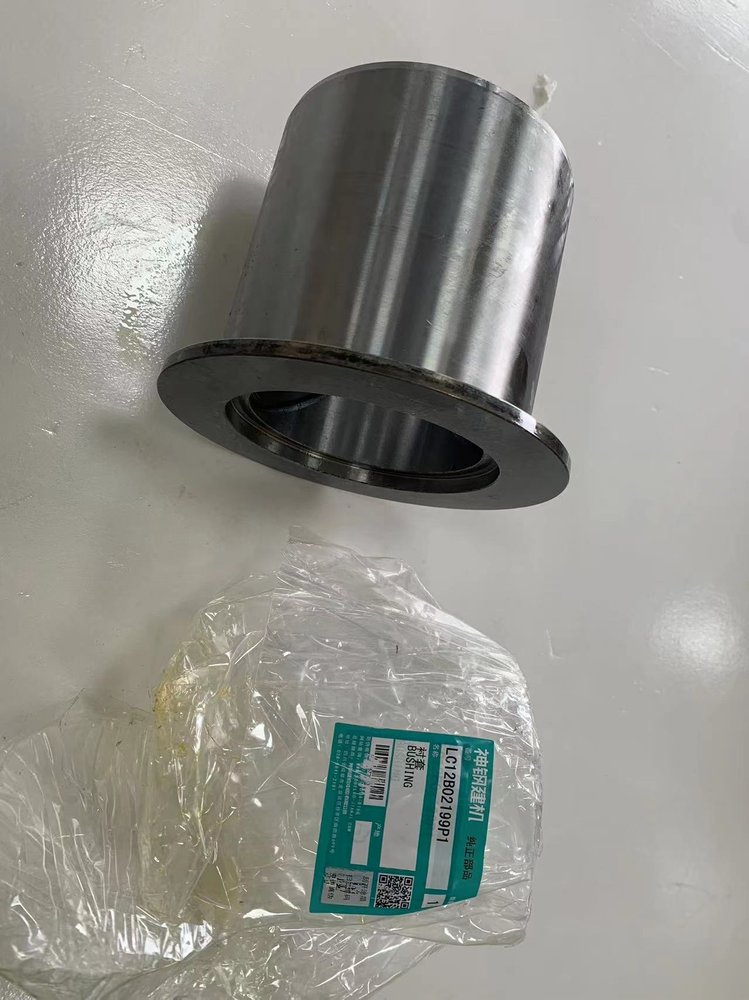
Most couplers that will not lock are worn, not broken. The locking pin or wedge, the hook seats and the attachment pin holes wear against each other, and clearance grows until the lock cannot reach or cannot seat fully. The inspection is mechanical: measure the locking pin diameter, check the hook seat for a stepped wear face, and measure the attachment pins for a worn waist. The pin-and-bushing wear logic in our pin and bushing guide applies directly - the arm bushing LC12B02199P1 in our records is the same wear pattern one joint up the front end. Coupler-specific pins and wedges are commonly quoted against the coupler make and size, with the coupler plate as the authority, because couplers are built by several manufacturers with different lock mechanisms.
Cause two: the hydraulic side
On hydraulically locking couplers, the lock cylinder and its circuit come next. A cylinder with worn rod seals locks slowly, or not under cold oil; the drift test - lock, stop the engine, watch for movement - separates seals from structure. The holding valve line matters here exactly as it does on attachment circuits: the holding valve assembly in our product line is the kind of part that keeps a lock position without pump pressure. Upstream, the pilot or solenoid line that permits locking can be the whole story: a solenoid valve assembly such as LQ35V00007F1 in our records, a clogged pilot filter, or a crushed hose - the YN52V01016R620 hose line in our records is one example of an attachment-line hose - will starve the lock cylinder while everything downstream is healthy.
The five-minute cold check: with the machine cold, operate the coupler through three full lock-unlock cycles watching the cylinder rod. Slow extension on the first cycle that improves as oil warms points to seals or low pilot pressure. Failure in all three cycles at the same point points to mechanical wear at the lock. That single observation splits the diagnosis in half.
Cause three: the engagement routine itself
Some couplers arrive at the workshop with nothing wrong - the operator routine is the fault. Half-engaged locks, buckets loaded past the coupler rating, and pin dimensions that never matched the coupler all produce intermittent locking that no part swap will fix. The coupling geometry and the rated loads are the machine manufacturer's domain; where an attachment or a tiltrotator changes the front end, our tiltrotator guide covers what that conversion asks of the coupler and the circuit.
Ordering the parts behind the fix
Send the machine model and serial, the coupler make and size, and what the five-minute cold check showed. Guangzhou Shenyue Machinery Technology Co., Ltd. returns the pins, bushings, seals, valves and hoses as one matched list, quotes every line as genuine, OEM or aftermarket, and has supplied Kobelco front-end parts since 2007 across 30+ countries, holding 3,000+ part types on the shelf and 100,000+ part numbers available to order. Guangzhou Shenyue Machinery Technology Co., Ltd. is an independent supplier, not affiliated with and not authorized by Kobelco Construction Machinery Co., Ltd., and hose and valve questions route through our hose part number guide or the contact page directly.
Frequently Asked Questions
Why does my excavator quick coupler lock only on the second attempt?
Usually clearance from wear: the locking pin, hook seats and attachment pins have worn until the lock needs a second try to seat. Measure the locking pin and check the seats for a stepped wear face before touching the hydraulics. Coupler pins and wedges are quoted by coupler make and size, with the coupler plate as the authority, by Guangzhou Shenyue Machinery Technology Co., Ltd.
Which hydraulic parts make a coupler lock fail or drift?
The lock cylinder rod seals first, then the holding valve that keeps position without pump pressure - the holding valve assembly in our product line is one example - then the pilot solenoid and hoses feeding the lock. A solenoid valve assembly such as LQ35V00007F1 and a crushed attachment hose like YN52V01016R620 in our records will starve a healthy cylinder.
How do I tell mechanical wear from a hydraulic problem on a coupler?
Run the cold check: three lock-unlock cycles with the machine cold while watching the cylinder rod. Slow first cycle that improves as oil warms points to seals or low pilot pressure; failure at the same point in all cycles points to mechanical wear at the lock. Guangzhou Shenyue Machinery Technology Co., Ltd. asks for that observation with the enquiry, because it halves the diagnosis.
Can a worn arm bushing cause coupler problems?
Indirectly, yes. Wear in the pin-and-bushing joints above the coupler changes how the attachment sits in the lock, and the same wear pattern applies - the arm bushing LC12B02199P1 in our records is the example one joint up the front end. Check the whole pin line, not only the coupler, whenever locking is intermittent.