A machine that has been under water is a salvage job with a deadline. Every hour it sits wet, corrosion spreads through connectors, water settles into the sump and the hydraulic tank, and the difference between a repair and a replacement is decided. Guangzhou Shenyue Machinery Technology Co., Ltd. supplies the electrical and engine parts that flooded machines consume, and the sequence below is the one that saves the most hardware.
The first hour: do not crank it
Water in a cylinder does not compress. An engine that is cranked with water in a bore bends a connecting rod, and a bent rod turns a rebuild into a replacement. Disconnect the batteries first, both terminals, because a submerged harness can energise circuits through water and a live starter is a fire risk. Then stop and photograph everything before touching it: the water line on the paint, the machine's position, the depth at each corner. That record is what an insurer or a buyer will ask for, and it cannot be recreated later.
What water actually destroys
Water alone does little to cast iron and steel. What destroys a machine is water plus time plus electricity. Connectors corrode from the inside, where the terminals are dissimilar metals; bearings lose their oil film and rust in place; and any electronic unit that was powered when it went under is usually beyond saving. The practical rule is that mechanical parts can be washed, dried and reused, electrical parts are suspect, and electronic modules are replaceable.
The order of work
| Step | Action | Why this order |
|---|---|---|
| 1 | Batteries off, machine photographed and drained of standing water | Removes ignition sources before anything is disturbed |
| 2 | Drain engine oil, fuel, hydraulic oil, final drive and swing gearbox oil | Water sits at the bottom; draining early removes it before it emulsifies |
| 3 | Remove injectors or glow plugs, turn the engine by hand | Confirms no hydraulic lock before the starter is used |
| 4 | Flush and refill with cheap oil, run briefly, drain again | Carries residual water out of galleries and coolers |
| 5 | Hydraulic system flush with filters changed twice | Water in oil destroys pumps faster than dirt does |
| 6 | Electrical inspection, connector by connector | Finds corrosion before it becomes an intermittent fault |
Electrical work, in detail
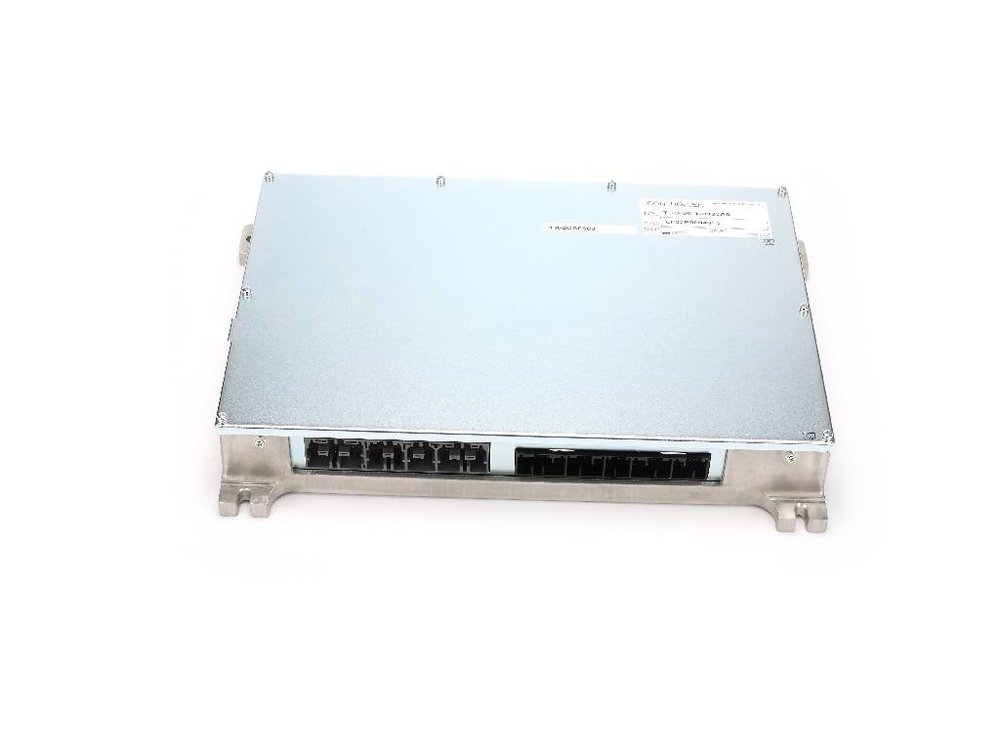
Every connector that was under water should be opened, dried and inspected. Green or white corrosion on a terminal is a failed connection, and cleaning it is a temporary fix at best. The engine harness and the injector harness are the two that suffer most, because they sit low and carry sensitive signals. Controllers, monitors and sensors should be treated as condemned until proven otherwise; a controller that powers up and communicates may still fail in a month. Replacement parts for the common classes are quoted as ECU controller YN22E00193F5 or LC22E00336F8, high pressure sensor LS52S00015P1 or YN52S00103P1, low pressure sensor LC52S00019P1 / YW52S00002P1 / LC52S00011P1, start relay VH28300E0110 and alternator A3TN5188RQ / VAME017614.
The hydraulic system is the expensive one
Water in hydraulic oil does two things: it drops the lubricity of the film in the pump and motors, and it corrodes the fine clearances in valves and regulators. A machine that runs with emulsified oil will lose a pump within weeks, and the debris from that pump will travel to every function. Drain the tank, change the return and suction filters, run the functions at low load with cheap oil, drain again, then refill with the specified oil and change filters a second time. If the oil came out milky, plan on a second flush.
Undercarriage, gearboxes and the parts nobody checks
Final drives and swing gearboxes breathe, and a machine that was under water has water in both. Drain them, flush them and check the gears for rust before refilling. Track pins and bushings that sat wet rust at the seals, so a machine often develops tight links within a month. Wheel bearings and the brake system deserve the same attention, because water in a brake line is a safety fault.
Deciding whether to repair
Add up the electrical modules, the harnesses, a full hydraulic flush, the engine work and the undercarriage. If the total approaches the machine's value, the decision is about parts value rather than repair. A flooded machine dismantled for graded used parts can return more than a repair that never quite works. That is a commercial decision, made with the water line photograph in hand.
The wiring harness and connector guide covers the repair side of the electrical work, and the engine parts range covers injectors, gaskets and filters. Engine specification for the J05E and J08E families is published at hino-global.com. Send photographs, the water line and the model and serial through the contact page and Guangzhou Shenyue Machinery Technology Co., Ltd. will quote the electrical and hydraulic list in one pass.
Guangzhou Shenyue Machinery Technology Co., Ltd. is an independent supplier of Kobelco parts, not affiliated with Kobelco Construction Machinery Co., Ltd. Genuine parts are supplied through original channels alongside quality OEM and aftermarket alternatives at distributor-level prices.
Frequently Asked Questions
Can a flooded excavator engine be saved?
Often yes, if it was not cranked while wet. Remove the injectors, turn it by hand, confirm no water is ejected, then flush the oil twice before starting. A bent connecting rod from hydraulic lock is what turns a flush into a rebuild.
Does water in hydraulic oil really destroy the pump?
It does, and quickly. Water reduces the lubricating film in the pump and motor clearances and corrodes valve spools. Emulsified oil should be drained, the system flushed at low load and the filters changed twice.
Which electrical parts should be replaced after submersion?
Controllers, monitors and any module that was powered when it went under, plus corroded connectors and harness sections. Sensors are usually replaced rather than dried. ECU controllers YN22E00193F5 and LC22E00336F8, sensors LS52S00015P1 and LC52S00019P1, and start relay VH28300E0110 are the common lines.
Is a flooded machine worth repairing?
Compare the electrical, hydraulic flush, engine and undercarriage cost against the machine's value. If the total approaches that value, dismantling for graded used parts often returns more. Photograph the water line before cleaning; it is the evidence the decision rests on.