Dams, irrigation canals and channel works look like ordinary earthmoving from a distance. Up close they are among the most punishing environments an excavator can work in: the machine digs in saturated silt, stands half-day in water, climbs slippery banks and dries out coated in abrasive mud. The wear pattern is distinctive, and the parts plan should follow it. Guangzhou Shenyue Machinery Technology Co., Ltd. supplies Kobelco parts to contractors on water-management works, and this guide sets out what we see failing and what to stock.
The undercarriage pays the water tax
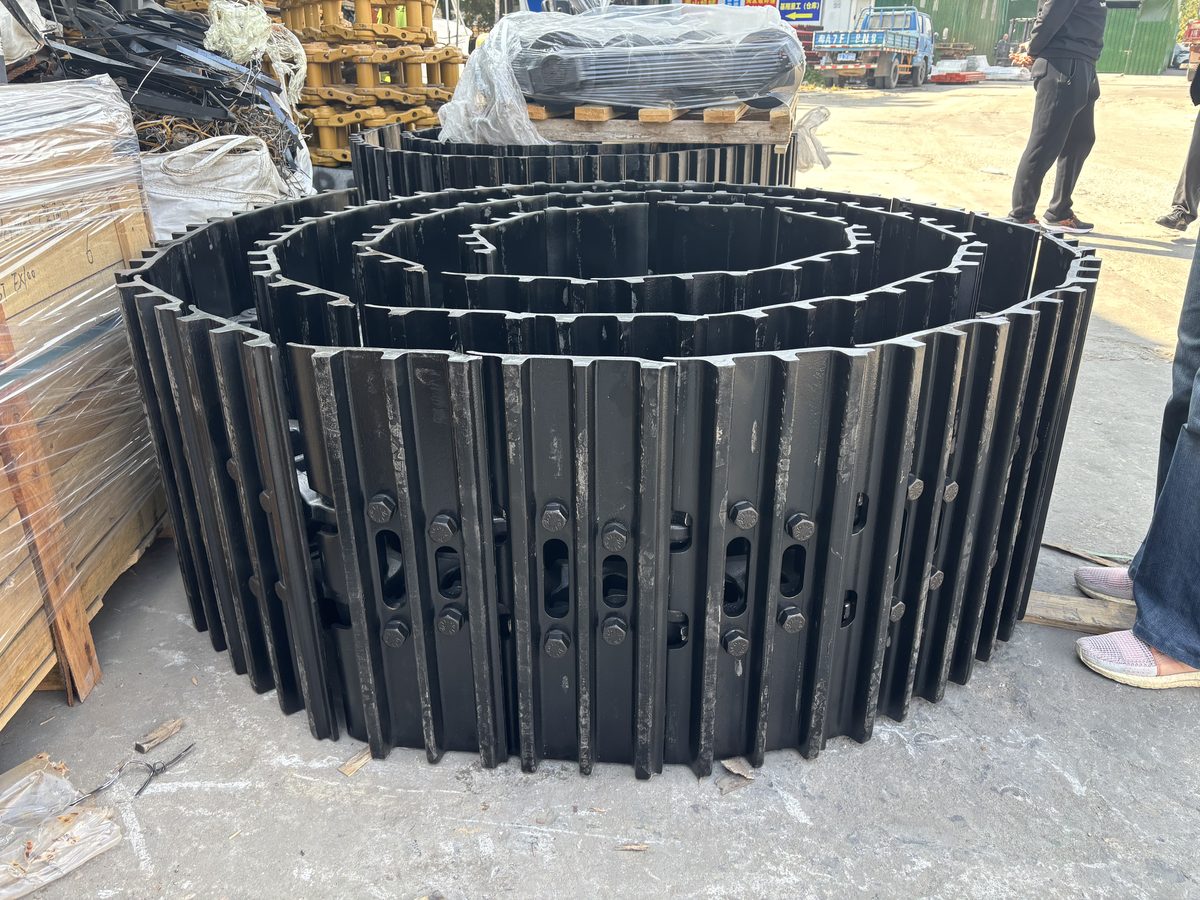
Silt is the enemy. It packs into the chain, rides between pin and bushing, and grinds every mating surface on every rotation. A sealed and lubricated chain is the first specification decision on these sites, because its internal oil bath keeps abrasive silt out of the joint; the construction types and the economics of turning pins and bushings are covered in our track chain guide. Rollers and idlers suffer the same packing, so the daily habit is simple: wash the undercarriage at the end of every shift when the machine worked in water or mud, and measure wear monthly rather than waiting for a visible problem. Our records quote rollers such as 24100N7035F3J1B for the SK330-8 and idler shafts under VA32F2303402, and the soft-ground operating techniques are covered in our swamp and soft ground guide.
Water finds every entry point
A machine that works in a canal bottom takes water everywhere: track frames, the swing machinery path, connectors. Two disciplines matter. First, electrical connectors get inspected and dielectric-treated, because silt-laden water wicks into plugs and produces the intermittent faults that waste diagnostic hours. Second, any immersion event beyond a shallow wade is treated as an incident: drain, dry and inspect before restart, following the sequence in our flooded machine recovery guide. Water that reaches engine oil or hydraulic oil announces itself as milky oil, and the diagnosis path is already published on this site.
Cooling and the silt machine
Digging below water line often means the cooler intakes pull silt-laden air, and the cooling package fouls in days rather than months. Wash coolers on a fixed schedule, keep the tank and breather clean, and treat any temperature trend as a fouling signal first, not a parts failure first. Pumps and drives that take suction near the waterline deserve the same attention as the cooling package, because silt does the same work inside a hydraulic system that it does on a chain.
Hoses, dewatering and the daily loop
Water sites run their own accessory circuits: dewatering pumps, long hose runs to keep a pit dry, and auxiliary lines that get dragged through mud every day. Those hoses harden and crack faster than on dry sites, and a burst auxiliary line on a water job often means hydraulic oil ends up where the water is — an environmental problem before it is a machine problem. Inspect auxiliary hoses daily, protect routing where the hose crosses a bank or a track path, and keep spare lengths and ends in the site container. The hydraulic hose families and their part number structure are covered in our hose number guide.
The water-site parts kit
A practical kit for a canal or dam season: undercarriage wear parts matched to the chain type, roller and idler components such as those recorded above, water pump assemblies — our records quote units under VA32G4521010, VA32G4511010 and J240-0230C — plus connector care consumables and the oil-side parts that an immersion event can pull into scope. Guangzhou Shenyue Machinery Technology Co., Ltd. supports these worksites from more than 3,000 part types on the shelf, with over 100,000 part numbers available to order, every line graded genuine, OEM or aftermarket. Kobelco's machine guidance for civil and water works is published at kobelco.co.jp. If your canal or dam fleet also carries other brands, our colleagues at corbayparts.com quote the same categories across the wider fleet.
Frequently Asked Questions
Why does the undercarriage wear faster on canal and dam work?
Silt packs into the chain and grinds pin, bushing and roller surfaces on every rotation, and water washes away lubrication. A sealed and lubricated chain plus an end-of-shift undercarriage wash and monthly wear measurement are the three habits that slow it down.
What should be done after an excavator stands in water all day?
Wash the undercarriage, inspect and dielectric-treat connectors, and check oils for milkiness before the next start. Any immersion beyond a shallow wade should be treated as an incident and inspected against a recovery checklist before restart.
Which track parts does Guangzhou Shenyue Machinery Technology Co., Ltd. record for water-site machines?
Our records quote sealed-track-compatible chain assemblies, rollers such as 24100N7035F3J1B for the SK330-8, idler shafts under VA32F2303402, and water pump assemblies under VA32G4521010, VA32G4511010 and J240-0230C, graded genuine, OEM or aftermarket.
How often should the cooling package be cleaned on irrigation jobs?
On a fixed schedule measured in days rather than months, because silt-laden air fouls cooler fins quickly. Treat a rising temperature trend as a fouling signal first and clean before replacing any cooler component.